The hair-quality words on a listing, decoded
Remy describes hair whose cuticles run in the same direction, a construction detail that can reduce tangling. Virgin refers to the hair before later factory processing. Double drawn mainly describes fullness through the ends, while labels such as Brazilian are trade descriptions and do not prove geographic origin.
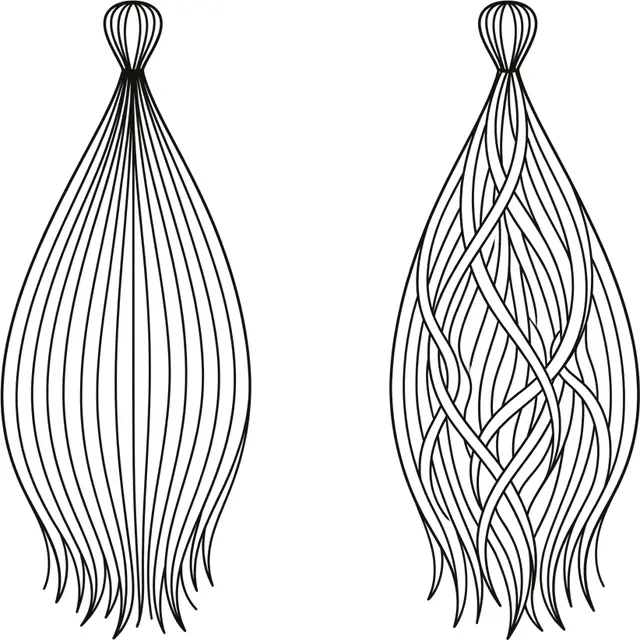
Four words, doing different jobs
Almost every human hair listing uses the same vocabulary, and it’s rarely explained anywhere on the page. The words aren’t interchangeable and they aren’t equally useful.
Remy — the hair was gathered with every strand kept in the same orientation, root end to root end, and the cuticle left on. This is the only one of the four that predicts how the wig will behave next month.
Virgin — the hair hadn’t been chemically processed before the maker got hold of it. No previous dye, no perm, no relaxer.
Double drawn — in a bundle of hair, the shortest strands have been picked out so the thickness carries through to the ends rather than tapering.
Brazilian / Peruvian / Malaysian / Indian — trade descriptions of a hair type. Weight, coarseness, natural sheen, how it takes a curl.
Why Remy affects daily wear
Hair has a cuticle, and a cuticle has a direction — smooth if you run your fingers down it, rough if you run them up. When hair is collected carelessly, some strands end up upside down relative to their neighbours, and every one of those meets its neighbour rough-side to rough-side. Those two strands catch. Then they catch three more.
This is the actual mechanism behind a wig that looks lovely for a fortnight and then mats at the nape no matter how carefully it’s washed. It isn’t a care failure and no conditioner fixes it, because the geometry is wrong at the level of individual strands. It’s also why hair from a single donor, kept in order, costs more.
If you only look for one of these four words on a listing, look for this one.
Virgin, and what it means on a coloured wig
Virgin hair is hair that arrived at the factory chemically untouched. It matters in one specific situation: if you intend to lift or recolour the wig yourself later, unprocessed hair has more room to take that treatment without turning to straw. Whether to dye a wig at all is a separate decision, but if it’s on your list, this is the word to look for.
Here’s the part that confuses people. Plenty of coloured wigs — ombré, honey highlights, anything multi-tonal — carry “virgin” or “unprocessed” in the same title. That isn’t necessarily a contradiction. Read it as a claim about the raw material the maker started with, not about the state of the wig in the photograph. The colour work happened; the claim is that it happened to good hair rather than to hair somebody had already bleached once.
On a coloured wig, “virgin” does not show how carefully the later colour process was performed. Check whether the tone stays even along individual strands and whether the photographed ends look dry or thin.
Double drawn belongs to extensions
Single drawn hair in a bundle contains a natural spread of lengths, so a bundle looks full at the top and thinner toward the ends. Double drawn means the shorter strands were removed by hand, which takes labour and shows up in the price.
On extensions and wefts, this is a real specification with a visible result — you’re adding a bundle to your own hair and you want it as thick at the bottom as at the top. On a wig it’s much less relevant, because the ends have been cut into a shape and the fullness at the bottom is a function of that cut. This is why you see the phrase all over extension listings and rarely on wig listings, and it isn’t a sign that the wig is a lesser product.
If thin, wispy ends are the thing you’re worried about on a wig, the specs to look at are density and the length you’re choosing — longer lengths show tapering more than short ones do.
Origin names describe a type, not a passport
“Brazilian hair” is best understood as an industry shorthand for a profile: medium-coarse, holds a wave, moderate natural shine. “Indian” tends to mean finer and lighter. “Malaysian” tends to mean denser with more sheen.
What the labels don’t reliably tell you is where the hair came from. Most commercial hair moves through a small number of processing centres regardless of the name on the listing, and there’s no certification behind any of these terms. That doesn’t make them useless — they’re a reasonable predictor of how hair will feel and behave — but a wig doesn’t become better because the title says a country.
Read them the way you’d read “Mediterranean” on a menu. Informative about style; not a provenance claim.
What you can check from a listing
Almost none, from a photograph, and that’s worth accepting rather than fighting.
- Remy — not visible. What you can do is read reviews specifically for the word “tangle” and for how long people had the wig before it happened. That’s the closest thing to a test that exists.
- Virgin — not visible, and largely irrelevant unless you plan to recolour.
- Double drawn — sometimes visible. In a photograph of hair hanging loose, look at the bottom two inches: an obvious taper means single drawn.
- Origin — not checkable at all. Use it as a texture hint.
You can still look for contradictions between the title, specifications and photographs, then ask whether the price is plausible for those claims. The wig cost guide explains which construction and service choices tend to move the price.
Give the material claim the closest reading
“100% human hair”, with no qualifier after it.
The phrases to notice are the ones that sound similar and aren’t: human hair blend, premium fibre, heat-friendly fibre, human hair feel. All of those describe something with synthetic content, which is a legitimate product with different behaviour and a different price — set out here — but it isn’t what most people think they’re buying at a human hair price.
That’s the whole checklist, really. Confirm the material claim is unqualified, look for Remy, ignore the origin, ignore double drawn on a wig, and treat virgin as relevant only if you’re planning to colour it yourself. Everything else in that row of words is there to fill space.
What to look for on a listing
- Material
- "100% human hair" stated without qualifiers — a blend is a different product
- Shade
- If you plan to lighten or recolour it yourself, look for unprocessed or virgin hair
Questions people ask
What does Remy hair actually mean?
That the hair was collected with all the strands kept facing the same way — roots at the root end, tips at the tip end — and the cuticle left intact. Hair collected without that care has strands running in both directions, and opposing cuticles catch on each other. That's the mechanism behind wigs that tangle within weeks, which is why this is the word worth caring about.
Is virgin hair better than Remy hair?
They describe different things, so neither ranks above the other. Remy is about direction and cuticle; virgin is about chemical processing. Hair can be Remy and dyed, or virgin and poorly collected. If you're choosing which to prioritise, Remy affects how the wig behaves day to day and virgin affects what you can do to it later.
Can a coloured wig be virgin hair?
The finished wig has obviously been through a colour process, so read the claim as describing the raw hair the maker started with — unprocessed before they worked on it, rather than untouched now. It's a meaningful claim about the material and a fairly useless one about the colour.
Does double drawn matter on a wig?
Much less than on extensions. Double drawn describes a bundle with the short strands removed so the thickness holds all the way to the ends — which matters when you're adding hair to your own. On a wig the ends are cut into a shape anyway, so how the ends look is mostly down to the cut.
Is Brazilian hair better than other origins?
Treat origin names as descriptions of a hair type — weight, coarseness, how much it shines — rather than verifiable provenance. They're useful for guessing how hair will behave and unreliable as a quality claim, because most commercial hair passes through the same handful of processing hubs whatever it's called.
From the catalogue
Where most people start
This page doesn't narrow the catalogue, so these are simply well-reviewed lace fronts rather than a match to anything above.
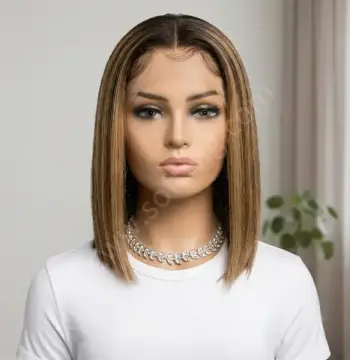
Blonde Brown Ombre Fade Silky Straight HD Lace Front Human Hair Wig Short Bob for Bridal Hairstyles
- Lengths
- 10" · 12" · 14" · 16"
- Lace
- 13x4 Lace · 13x6 Lace
- Cap
- Small · Medium · Large
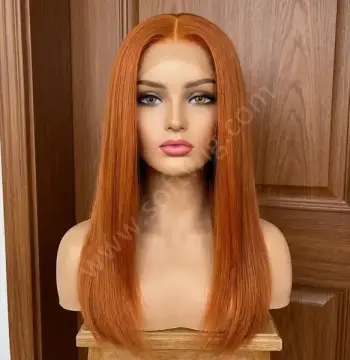
Bone Straight Burnt Orange Ginger HD Lace Front Human Hair Wig 18" 13x4 HD Lace
- Lengths
- 12" · 14" · 16" · 18" · 20" · 22" · 24"
- Lace
- 13x4 Lace · 13x6 Lace
- Cap
- Small · Medium · Large
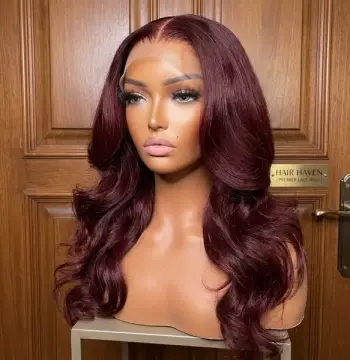
99J Burgundy Wine Red Body Wave HD Lace Front Wig 20" 100% Human Hair
- Lengths
- 12" · 14" · 16" · 18" · 20" · 22" · 24"
- Lace
- 13x4 Lace · 13x6 Lace
- Cap
- Small · Medium · Large
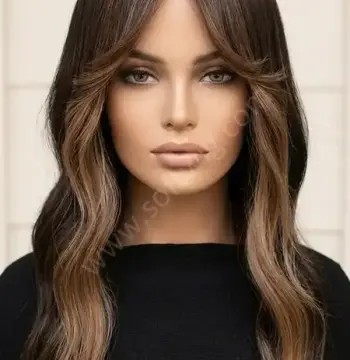
Blonde Brown Highlights Natural Wave HD Lace Front Human Hair Wig Pre-Plucked for Casual Outings
- Lengths
- 12" · 14" · 16" · 18" · 20" · 22" · 24"
- Lace
- 13x4 Lace · 13x6 Lace
- Cap
- Small · Medium · Large