Can you dye a wig?
You can dye a human hair wig darker, and you can tone or gloss it to fix brassiness. You generally can't lift it lighter without damage, because wig hair has already been processed once and has less left in it than hair on a head. Synthetic can't be dyed at all with ordinary colour.
Start with what you’re working with
Colour on a wig behaves differently from colour on your own head, and the reason is worth understanding before you decide anything.
Hair growing from your scalp is being maintained — the cuticle is intact, natural oils reach it, and it has whatever resilience it grew with. Human hair on a wig has been cut, cleaned, processed, usually coloured at the factory, and has had no scalp supporting it since. It has less in reserve.
That doesn’t mean it can’t be coloured. It means the margin is narrower, and processes that your own hair shrugs off can take more out of a wig than expected.
The practical consequence is a hierarchy. Adding pigment is safe and predictable. Neutralising a tone is safe and usually effective. Removing pigment — lifting to a lighter shade — is where things go wrong, and it goes wrong more often on a wig than it would on you.
Going darker: reliable
If you want to go from light brown to dark brown, or from brown to black, this works and it’s the direction we’d say yes to without much hedging.
Depositing colour doesn’t require opening the hair up to remove anything. A semi-permanent or deposit-only shade sits in and on the hair, and because wig hair is often slightly porous from processing, it takes colour readily.
That porosity is worth planning around, though. Two consequences:
It can grab darker than intended. Porous hair absorbs pigment quickly, so processed wig hair tends to take a shade deeper than the same formula would on growing hair — how much deeper depends on the hair and the product, which is exactly why the strand test below matters. Mixing the colour a shade lighter than your target is the usual adjustment colourists make for this.
It can go patchy at the ends. The ends are the oldest and most porous part, so they take more colour. Applying to the mid-lengths first and the ends last, for the shortest time, evens this out.
Test on a hidden section — the hair at the very nape, underneath — and wait for it to dry before judging. Wet hair always reads darker than it will once dry, so judging while it’s damp is how people talk themselves into a second application they didn’t need.
Toning brass: the most successful correction
This is the one worth knowing about, because it solves the most common colour complaint and it’s low risk.
Brassiness — hair looking orange or unpleasantly warm — is what happens when the underlying warm pigments in dark hair show through a lighter colour. It’s especially common on ombré and highlighted wigs, and it can develop over time as washing removes the toner the factory applied.
A blue or purple-based toner, or a coloured gloss, neutralises that warmth. It doesn’t lift, doesn’t restructure the hair, and takes fifteen minutes. It’s about as gentle as a chemical process on hair gets, and it’s frequently the entire fix for a wig someone was about to give up on.
Toner fades, so expect to repeat it after several washes. Purple shampoo serves a different purpose: it can slow the return of warmth but will not correct strong brassiness that is already visible.
Lifting lighter: where it goes wrong
Being direct: this is the one we’d steer you away from doing yourself, and we’d rather explain the mechanism than just say no.
Lifting means using bleach to remove existing pigment. It requires opening the cuticle and stripping colour out, and how well hair survives that depends on how much intact structure it had to begin with. Wig hair has typically been through the process once already at the factory — most dark human hair wigs sold as brown or highlighted were black hair that was lifted and coloured.
Doing it a second time, at home, produces the failures you’d expect: dryness that conditioning doesn’t resolve, ends that snap, and colour that comes out unevenly because the hair’s porosity isn’t uniform along its length.
If you want a lighter wig, buying it lighter is dramatically cheaper than lifting one, once you account for the wig you’ll ruin learning.
If lifting is unavoidable, take the wig to a colourist who has worked on wigs and can treat it on a mannequin head. The narrow margin for error comes from previously processed hair, even when the person applying the colour is experienced.
Colour that’s wrong out of the box
Worth separating from styling ambitions, because the remedy is different.
If a wig arrives visibly different from the listing photograph, correction isn’t your first move — that’s a returns conversation. Photographs are shot under specific lighting and a shade can look genuinely different in daylight, but there’s a difference between “warmer than I expected” and “not the colour advertised”.
And if colour runs out of the hair on the first wash, that’s excess dye that wasn’t rinsed properly at the factory. It usually settles after a couple of washes in cool water, and it isn’t something you caused or should try to fix with more colour.
Resolve either issue with the seller before applying colour, because any chemical change is likely to end your option to return the wig.
The short version
Darker: yes, mixed a shade lighter than your target, tested at the nape first.
Brassy: yes, a toner or gloss, and it’s probably all you need.
Lighter: buy it lighter instead, or pay a colourist who knows wigs.
Synthetic: no.
Every colour process uses some of the wig’s remaining wear life. Balance that cost against how often you would wear the current shade; an untouched wig that stays in a drawer has little practical value.
What to look for on a listing
- Material
- Human hair only — synthetic won't take conventional colour
- Shade
- Buy the shade you want, or a shade lighter if you plan to darken it
Questions people ask
Can I dye a human hair wig darker?
Yes, and it's the reliable direction. Deposit-only colour or a semi-permanent shade adds pigment without needing to lift what's there, which is why going darker works predictably and going lighter often doesn't.
Can I bleach a wig lighter?
You can, and it frequently ends badly. Wig hair has usually been processed and coloured already, so there's less cuticle left to survive a second lift. The common results are brittle ends and uneven patches. If you want it done, a colourist who works on wigs is worth the money.
Can I fix a brassy or orange tone?
Usually, yes, and this is the most successful colour correction on a wig. A blue or purple-based toner or gloss neutralises unwanted warmth without lifting anything. It's a low-risk process and it's often all that's needed.
Can synthetic wigs be dyed?
Not with hair colour, which has no fibre to bind to. Alcohol or fabric-based inks are used by some people with mixed results, and the process is unpredictable. Treat synthetic colour as permanent when you buy.
Will dyeing shorten the wig's life?
Any chemical process costs some wear life — a gloss or toner very little, a permanent darkening a moderate amount, a bleach lift a great deal. That's a real cost and worth weighing, but it isn't a reason to live with a colour you dislike.
From the catalogue
Where most people start
This page doesn't narrow the catalogue, so these are simply well-reviewed lace fronts rather than a match to anything above.
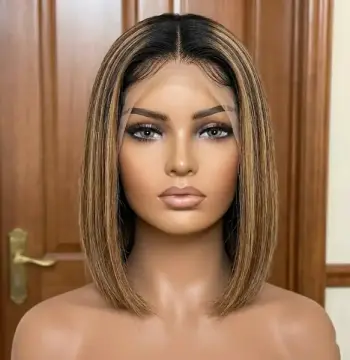
14" Natural Black Roots Ombre Brown Highlight Straight Bob HD Lace Front Human Hair Wig
- Lengths
- 10" · 12" · 14" · 16"
- Lace
- 13x4 Lace · 13x6 Lace
- Cap
- Small · Medium · Large

HD Lace Front Human Hair Wig Dark Brown Wave Highlights Pre-Plucked Natural Hairline Brazilian Hair
- Lengths
- 12" · 14" · 16" · 18" · 20" · 22" · 24"
- Lace
- 13x4 Lace · 13x6 Lace
- Cap
- Small · Medium · Large
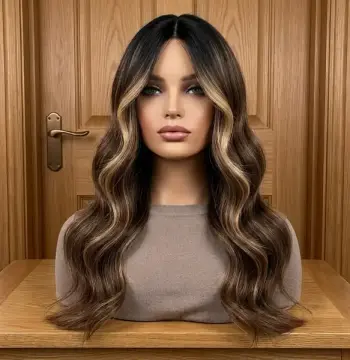
20" Honey Blonde Highlight Body Wave HD Lace Front Human Hair Wig Natural Black Roots
- Lengths
- 12" · 14" · 16" · 18" · 20" · 22" · 24"
- Lace
- 13x4 Lace · 13x6 Lace
- Cap
- Small · Medium · Large
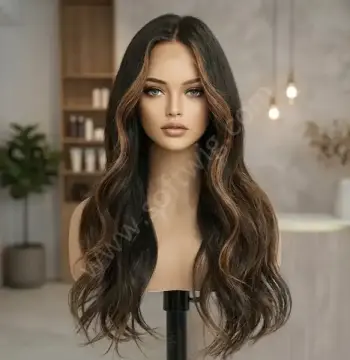
Multi-Tone Highlight Ombre Brown Beach Wave HD Lace Front Human Hair Wig for Wedding Parties
- Lengths
- 12" · 14" · 16" · 18" · 20" · 22" · 24"
- Lace
- 13x4 Lace · 13x6 Lace
- Cap
- Small · Medium · Large