How wig length is measured, and where it lands on you
Wig length is measured stretched, from the cap to the ends, and it's the number of inches you'd get if you pulled the hair straight. That makes it reliable on straight hair and misleading on anything textured — and where it lands on your body depends on your height and torso, not on the wig.
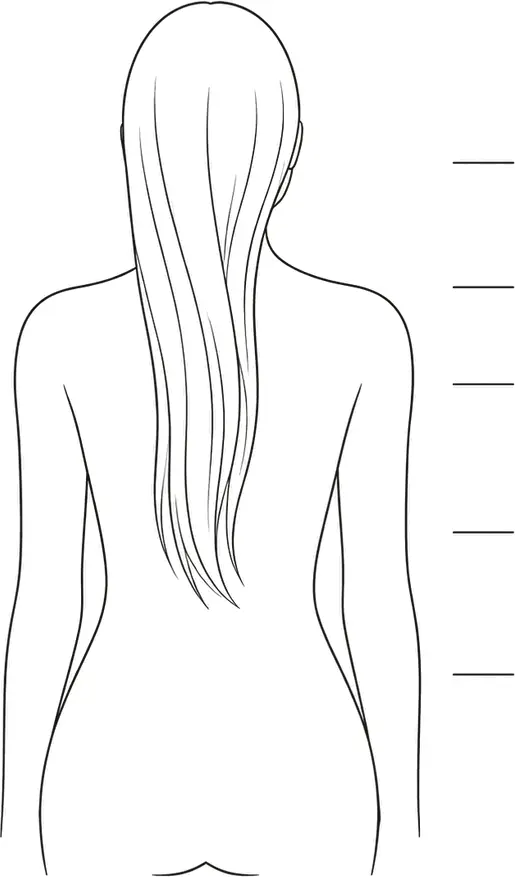
How the measurement works
Length is measured with the hair pulled straight, from the cap at the crown to the tips. It’s a strand measurement, not a “where will this sit on me” measurement, and understanding that distinction resolves most of the confusion.
Two consequences follow.
On straight hair, the number is honest. A 16-inch straight wig gives you 16 inches of hair hanging down. What varies is where those 16 inches land on you, which is about your body rather than the wig.
On textured hair, the number is technically true and practically misleading. A curl or a wave occupies less vertical distance than the strand’s actual length, so the same 16 inches sits higher. This isn’t a trick — the hair really is 16 inches long — but it’s why people order a length they’ve worn before and receive something that looks shorter.
Roughly what to expect: a body wave sits about an inch short of its number, a loose or deep wave two to three inches short, and a curl anywhere from four to six inches short. A tight kinky curl can lose close to half.
Where each length lands
For someone of average height, measuring from the crown:
| Length | Roughly where it falls |
|---|---|
| 8–10 inches | Chin, a classic bob |
| 12 inches | Just past the jaw |
| 14 inches | Collarbone |
| 16 inches | Shoulder, or just below |
| 18 inches | A couple of inches past the shoulder |
| 20 inches | Armpit level |
| 22–24 inches | Mid-back |
| 26 inches and up | Lower back |
Treat this as an approximation, because the variable it can’t account for is you.
Your frame changes the answer
This is the part listings never mention, and it explains a good deal of length disappointment.
Two people order the same 18-inch wig. One is 5′2″ with a short neck; the wig sits close to mid-back. The other is 5′10″ with a long torso; the same wig barely clears the shoulders. Neither wig is wrong.
Height matters, and torso length matters more than height does — the distance from your crown to your shoulder is what the first several inches are spent on, and that distance varies by three or four inches between adults of similar height.
Use a soft tape to measure from the crown, past the ear, to the point where you want the ends to sit. Add some allowance for wave or curl. This gives you a body-specific reference to use alongside the chart.
The length most people end up at
If you look at what daily wearers own after their second or third wig, there’s a clear convergence on 14 to 18 inches.
The reasoning is consistent when you ask. Long enough to read as hair rather than as a haircut. Short enough to brush out in a couple of minutes. Above or barely at collar level, which is where the nape friction that ruins wigs comes from. And light — at a fixed 180% density, a 16-inch wig weighs meaningfully less than a 24-inch one, and that difference is what you feel at hour eight.
Almost everybody’s first wig is longer than this, and a large proportion of second wigs are shorter than the first. That pattern is worth knowing about before you spend, because the first purchase is usually made from photographs and the second from experience.
None of which is an argument against long hair. It’s an argument for knowing what the extra eight inches costs: more weight, more heat, more drying time, more detangling, and more of the hair spending its day rubbing against your coat.
Buying long and cutting it
If you’re between lengths, or genuinely unsure, ordering long and having it cut is the safer error.
Human hair cuts exactly like your own. A stylist can take a 22-inch wig to 16 inches, add layers, and put in a fringe, and the result is a wig fitted to you rather than to an average. Adding length is not an option in any comparable way.
Confirm that the salon accepts wig work before booking. The cut should be planned with the wig on you or secured to a suitable head form, so the stylist can see how the cap changes the fall and final length.
Length and lace, briefly
One interaction worth knowing.
Short wigs are less forgiving about hairline placement. When hair falls forward around your face, it softens the front edge and hides a lot of small imperfections. A bob has nothing falling forward — the hairline is fully exposed and has to be right.
So if you’re new to wigs and drawn to something short, be aware you’re choosing the length with the least margin for error in fitting. It’s easier to live with day to day and harder to get looking convincing in the first week.
What to look for on a listing
- Material
- Human hair, if you plan to have the length adjusted by a stylist
- Density
- 180% on essentially every listing you will see, so length is the weight decision
- Length
- 14 to 18 inches is where most daily wearers settle after their first wig
Questions people ask
How is wig length measured?
From the cap at the crown down to the tips, with the hair pulled straight. That's the number in the listing. On a straight wig it matches what you'll see; on a wave it'll sit an inch or two shorter, and on a curl noticeably shorter than that.
What length is shoulder length?
For someone of average height, somewhere around 14 to 16 inches. But this varies with your height and the length of your neck and torso more than people expect — the same 16-inch wig can be shoulder length on one person and comfortably past it on another.
Why does my wig seem shorter than ordered?
Three common reasons, in order: texture shrinkage, the measurement starting at the crown rather than at your hairline, and the hair falling over your shoulders rather than hanging free. None of them mean you were shortchanged, though a wig that's genuinely inches out does happen.
Is it better to order long and cut it?
Often, yes, if you're unsure. Human hair cuts and layers exactly like your own, a stylist can take it to where you want it, and you can't add inches back. It costs a little more up front and removes the main source of length regret.
Does length affect how hot a wig is?
Considerably, and it's the main lever you have. Density is effectively fixed at 180% on the ready-to-wear listings you will be choosing between, so total hair — and therefore weight and heat — comes down to length. A short wig at 180% is a comfortable wig.
From the catalogue
Where most people start
This page doesn't narrow the catalogue, so these are simply well-reviewed lace fronts rather than a match to anything above.

Ombre Brown Flowing Long Wave HD Lace Front Wig for Black Women
- Lengths
- 12" · 14" · 16" · 18" · 20" · 22" · 24"
- Lace
- 13x4 Lace · 13x6 Lace
- Cap
- Small · Medium · Large

20" Honey Blonde Highlight Body Wave HD Lace Front Human Hair Wig Natural Black Roots
- Lengths
- 12" · 14" · 16" · 18" · 20" · 22" · 24"
- Lace
- 13x4 Lace · 13x6 Lace
- Cap
- Small · Medium · Large

HD Lace Front Human Hair Wig Natural Deep Brown Body Wave Middle Part Pre-Plucked Natural Hairline Brazilian Hair
- Lengths
- 12" · 14" · 16" · 18" · 20" · 22" · 24"
- Lace
- 13x4 Lace · 13x6 Lace
- Cap
- Small · Medium · Large

8 Inch Natural Black Sleek Straight HD Lace Front Human Hair Wig Pixie Cut Unprocessed Virgin for Holiday Glam
- Lace
- 13x4 Lace · 13x6 Lace
- Cap
- Small · Medium · Large