When a bob wig makes daily wear easier
A bob keeps most of the hair above the coat collar, reducing friction and tangling at the nape. It is light, quick to brush and practical for frequent wear, but it gives you fewer options for tying the hair back or changing the shape.
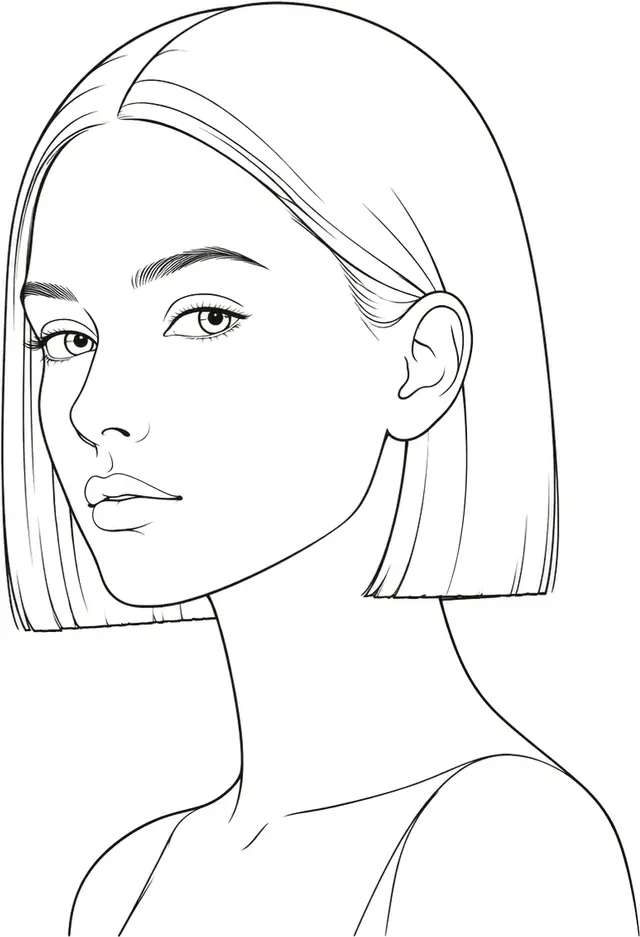
What it's good at
- Removes nape friction entirely, which is where daily wear does its damage
- Dries in a fraction of the time of long hair
- Lighter on the cap, so more comfortable through a long day
- Reads as a deliberate style choice rather than as "long hair"
What's harder about it
- No length to hide behind — cap fit and hairline are fully on show
- A bob is a commitment; you can't put it up or pull it forward
- Blunt ends show damage sooner than layered length does
- Less flattering if you dislike hair sitting against your jaw
The friction argument
Most advice about short wigs is about your face shape. This isn’t.
The practical case for a bob is that on a wig worn most days, the overwhelming majority of damage happens in a band a few inches wide at the back of your neck. Coat collars, car headrests, chair backs, scarves, bag straps. Hair rubs against fabric hundreds of times a day, the cuticles catch on each other, and that’s how matting starts.
A bob that stops at the jaw simply isn’t in that zone. Hair that ends at the collarbone barely is. You haven’t managed the problem — you’ve removed it.
That’s why, when someone tells us they’re wearing a wig five days a week and they’re on their second one within a year, the first question is how long the first one was.
What a bob doesn’t forgive
Here’s the honest counterweight, and it’s a real one.
Long hair hides a multitude of fitting sins. If the cap sits half an inch too far back, if the hairline isn’t quite blended, if the density at the crown is heavier than it should be — length falls forward and softens all of it. Take that length away and everything is on show.
A bob asks you to get three things right:
- Cap size. With no weight of hair pulling the wig into place, a cap that’s slightly loose will shift, and there’s nothing to disguise it when it does. Measure your head properly before you order rather than after.
- Where it sits. A bob positioned a centimetre too far back reads immediately as a wig, because the proportion between forehead and hair is wrong and there’s no fringe of length to distract from it.
- The ends. Blunt ends show damage sooner than layered ones. A bob that’s gone dry at the tips looks worse than long hair with the same problem, because you can see every end at once.
None of that is hard. But it means a bob is easier to live with and harder to get away with — the opposite of the way people usually assume short wigs work.
The thing you give up
A bob is one look, all day, every day you wear it. You can’t put it up when you’re cooking. You can’t pull it back at the gym. You can’t get it out of your face on a hot afternoon.
For some people that’s irrelevant. For others it’s the deciding factor, and it usually only becomes obvious in week two.
Before committing, notice how often you tie your hair back during a normal week. If that is a daily habit, choose enough length for a secure tie or confirm that the bob still works for you when it must stay down.
The version we’d steer you towards
If a bob does suit you, one detail is worth paying attention to: length relative to your jaw, not length in inches. Fourteen inches means something different on different people, and the number in the listing tells you nothing about where the ends will land on you.
Ends that stop at the widest point of the jaw pull the eye straight there. An inch or two longer, sitting just below it, almost always looks better and gives you a little room to have it trimmed once you’ve lived with it.
Longer than you think, then adjust down, is the right order. It’s the only direction that’s reversible.
What to look for on a listing
- Length
- 12–16 inches
- Cap
- Fit matters more here than on any other length — measure properly
Questions people ask
Is a bob easier for a first wig?
In handling terms, very much so — less hair to detangle, faster to dry, lighter to wear. But it's less forgiving in fitting terms, because there's no length falling forward to soften a cap that sits slightly wrong. It's easier to live with and harder to get away with.
Will a bob make my face look wider?
Where the ends land matters more than the length itself. Ends that stop exactly at the widest part of your jaw draw attention there; an inch or two longer, sitting below it, usually doesn't. If you're unsure, err longer — you can always have it trimmed, and you can't go back.
Can I tie a bob up?
Mostly not, and that's the real cost. A bob is one look, all day. If your day includes anything where you'd normally pull hair back — the gym, cooking, heat — that's worth thinking about before you order.
Do bobs last longer than long wigs?
Often, yes, though not because the hair is better. There's less of it to abuse, less friction at the nape, and less handling every day. The trade is that blunt ends show wear more visibly when it does arrive.
Matching wigs
What we'd point you at
Filtered on cut. Cap, lining and attachment aren't in the catalogue data, so check those on the product page.
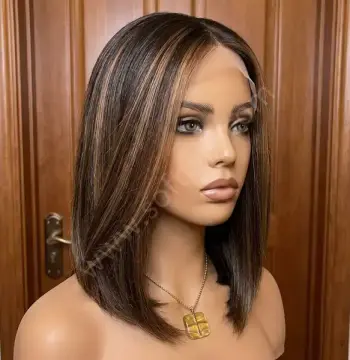
Soft Blonde Highlights over Brown Bone Straight HD Lace Front Human Hair Wig Short Bob for Bridal Hairstyles
- Lengths
- 10" · 12" · 14" · 16"
- Lace
- 13x4 Lace · 13x6 Lace
- Cap
- Small · Medium · Large
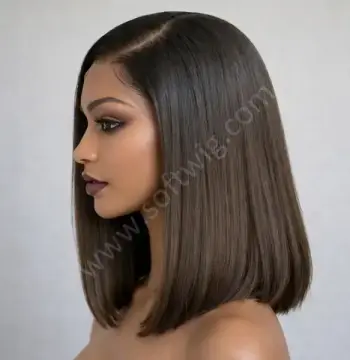
Tangle-Free Soft Ombre Brown Sleek Straight HD Lace Front Wig Short Bob for Wedding Parties
- Lengths
- 10" · 12" · 14" · 16"
- Lace
- 13x4 Lace · 13x6 Lace
- Cap
- Small · Medium · Large
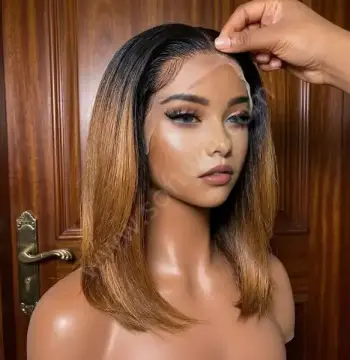
Silky Straight Ombre Medium Brown HD Lace Front Human Hair Wig 14" Short Bob Glueless
- Lengths
- 10" · 12" · 14" · 16"
- Lace
- 13x4 Lace · 13x6 Lace
- Cap
- Small · Medium · Large
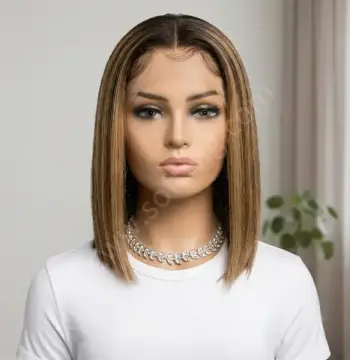
Blonde Brown Ombre Fade Silky Straight HD Lace Front Human Hair Wig Short Bob for Bridal Hairstyles
- Lengths
- 10" · 12" · 14" · 16"
- Lace
- 13x4 Lace · 13x6 Lace
- Cap
- Small · Medium · Large