Wigs with bangs
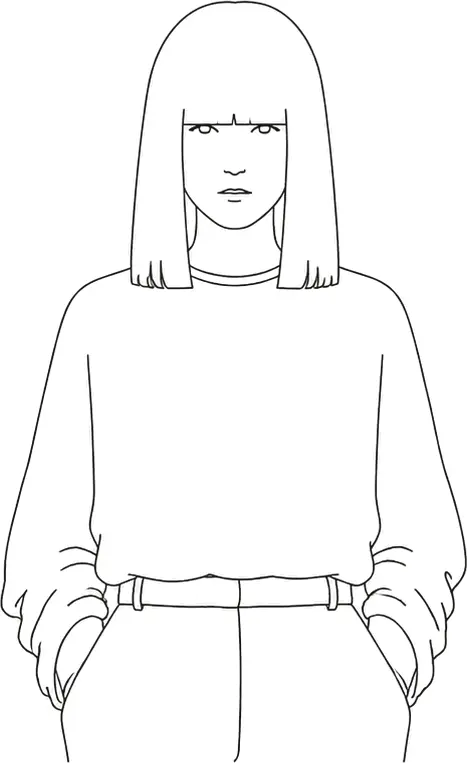
A fringe covers the front lace, which is the part hardest to make convincing and the part people look at. That makes it the easiest wig to wear well, particularly for a first wig or for concealment. The cost is that you can't change your mind — the fringe is cut and it doesn't grow back.
What it's good at
- Covers the front lace, so hairline realism largely stops being your problem
- The most forgiving option for a first wig, because positioning matters less
- Best available concealment if you're anxious about the front edge being spotted
- Frames the face without needing any styling in the morning
What's harder about it
- The fringe is permanent — it won't grow, so you can't change your mind
- No option to wear the hair off your face, which rules out several looks
- Gets oily faster than the rest of the wig, because it sits against your skin
- Needs trimming as it drops, and a badly trimmed fringe ruins the whole wig
- The area over your forehead is warmer, which some people notice in summer
A fringe is a solution before it’s a style
Most style pages are about a look. This one is mostly about a problem it solves.
The hardest thing about wearing a wig convincingly is the front hairline. It’s where lace meets skin, it’s where knots show if they’re too dark, it’s where the position of the whole wig is judged, and it’s the first place anyone looks — because that’s where people look at everyone’s hair.
A fringe covers all of it.
That single fact makes a wig with bangs the most forgiving thing you can buy. Position matters less, because there’s no exposed edge to sit half an inch too high. Knot treatment matters less, because the knots are behind hair. Blending matters less, because there’s nothing to blend.
For a first wig or discreet hair-loss coverage, a fringe removes the need to blend an exposed front edge. Treat it as both a style choice and a practical construction decision.
What it costs: no changing your mind
Here’s the trade, and it’s a real one.
Hair on a wig doesn’t grow. Every wig purchase is slightly permanent for that reason, but with a fringe it’s the whole point of the wig — the shape is cut, and it stays cut for the life of the thing.
On your own head, a fringe you’ve gone off is a mildly annoying three months. On a wig, it’s the wig. If in six weeks you want your hair off your face, or you find the fringe sits wrong on the day you have a photograph taken, there is no version of that wig without a fringe.
Which suggests a reasonable rule: buy bangs if you’ve worn a fringe before and liked it, or if concealment matters enough that you’d accept the constraint. Don’t buy bangs as an experiment.
If you are unsure, start with a curtain or side-swept fringe. It still softens the front edge but can be pinned or tucked away, preserving more styling flexibility than a blunt fringe.
The maintenance nobody warns you about
The fringe is the only part of a wig that touches your skin all day, and that changes how it behaves.
It picks up oil from your forehead and it does this faster than you’d expect — a fringe looks limp and separated after a few wearings, while the rest of the wig still looks clean. The instinct is to wash the whole wig, which is bad for it: washing is the most damaging routine event in a wig’s life and doing it three times as often is a poor trade.
The better approach is to wash the fringe alone. Hold the wig so the fringe hangs forward over a basin, wet just that section, a small amount of shampoo, rinse, blot, air-dry. Two minutes, no impact on the rest of the wig. This is the single most useful habit for anyone wearing bangs daily.
Dry shampoo can extend the time between washes at the fringe. Use heat sparingly in the same area, because repeated shaping concentrates damage on a small section that is already handled more often.
Warmth, which is not a small thing
A fringe sits against your forehead. On a warm day, or in a warm office, that’s a strip of skin covered by hair that isn’t going anywhere.
For most people this is unremarkable. For anyone who runs hot, has a reactive scalp, or is dealing with hot flushes, it’s worth knowing before you buy — it’s the one comfort disadvantage of a fringe and it’s not something you can adjust away.
A lighter, wispier fringe helps. A side-swept one, which can be moved off centre, helps more.
Cutting one into a wig you already own
If you own a wig with no fringe and you want one, it’s a straightforward job for someone competent and a risky one at home.
Two reasons it’s harder than cutting your own fringe. Hair on a mannequin head falls differently from hair on a person, because a stand isn’t the shape or angle of your head — a fringe cut flat on a stand is often too short at the sides once it’s worn. And you can’t see the effect on your face while you’re cutting, which is the only measure that matters.
For a home trim, wear the wig dry and use small vertical snips. Stop well above the final target, wear it for a day, then reassess. A staged cut leaves room to correct the shape; a short horizontal cut does not.
Who should skip it
If you want the option to wear your hair off your face — pulled back, up, or pinned — don’t buy a fringe, because you’ll be paying for a permanent commitment to one silhouette.
If you have a high forehead you like showing, or you wear glasses and dislike hair on the frames, the same applies.
And if you’ve never worn a fringe, consider that it changes how your face reads far more than length or texture does. It’s the highest-impact single feature on this whole site, and it’s the least reversible.
Questions people ask
Does a fringe really hide the hairline?
Yes, and it's the most reliable way to do it. The lace front is the hardest part of a wig to make invisible; a fringe sits over it. If your main worry is someone noticing the front edge, this removes the question rather than answering it well.
Can I cut a fringe into a wig I already own?
You can, and a stylist should do it. Cutting a fringe on a wig is harder than on your own head because there's no scalp to guide the shape and hair on a stand falls differently from hair on a person — ideally it's cut while you're wearing it. It is also irreversible, which is worth two sentences of thought.
Can I grow the fringe out?
No. This is the one property people forget: wig hair doesn't grow. A fringe you tire of is a fringe you own, so buy one only if you're reasonably confident you'll still like it in six months.
How do I keep it looking right?
Wash the fringe more often than the rest of the wig — it touches your forehead and picks up oil, so it goes limp days before the rest looks dirty. A quick rinse of just the front, with the rest of the wig kept dry, takes two minutes.
Will it need trimming?
Eventually. Fringes drop slightly as the hair settles and the cap relaxes, and what sat above the eyebrow can sit in your eyeline a month later. A small trim by someone competent restores it; doing it yourself dry, with the wig off your head, is the classic way to take off too much.
Matching wigs
What we'd point you at
Filtered on bangs. Cap, lining and attachment aren't in the catalogue data, so check those on the product page.

Natural Black Wave HD Lace Front Human Hair Wig with Bangs Pre-Plucked Hairline Glueless
- Lengths
- 12" · 14" · 16" · 18" · 20" · 22" · 24"
- Lace
- 13x4 Lace · 13x6 Lace
- Cap
- Small · Medium · Large

Heat-Safe Dyeable Beach Wave Rich Dark Brown HD Lace Front Human Hair Wig with Bangs for Glam Nights
- Lengths
- 12" · 14" · 16" · 18" · 20" · 22" · 24"
- Lace
- 13x4 Lace · 13x6 Lace
- Cap
- Small · Medium · Large

Layered Wavy HD Lace Front Wig with Bangs 16" Dark Brown 100% Real Human Hair
- Lengths
- 12" · 14" · 16" · 18" · 20" · 22" · 24"
- Lace
- 13x4 Lace · 13x6 Lace
- Cap
- Small · Medium · Large

Soft Silky Loose Body Wave Espresso Brown HD Lace Front Human Hair Wig with Bangs for Wedding Parties
- Lengths
- 12" · 14" · 16" · 18" · 20" · 22" · 24"
- Lace
- 13x4 Lace · 13x6 Lace
- Cap
- Small · Medium · Large