Choosing a wig for hair loss
When the goal is that nobody notices, the specs that matter shift. One natural shade beats highlights, moderate density beats full, and a fringe solves the hardest problem on any wig — the hairline — before it starts.
A note on health
This is a shopping guide, not medical advice. Hair loss has a lot of possible causes and some of them are worth investigating properly — if yours is sudden, patchy, or comes with a sore or broken scalp, that is a conversation for a doctor or a dermatologist before it is a shopping decision. Organisations like the American Academy of Dermatology and the Mayo Clinic are reasonable places to start reading.
This is a good fit if
- You want the wig to go unremarked rather than admired
- You're dealing with thinning, patchy loss or a receding hairline
- You'd rather have one thing that works than several that nearly do
Look elsewhere if
- Your scalp is currently sore, broken or inflamed — see a doctor first
- You want a wig as a fashion piece rather than as concealment
- You're mid-treatment and haven't been told what to expect yet
The brief is different
Most wig advice is written for someone who wants a wig to look good. This is written for someone who wants a wig to not be noticed — and those two briefs pull in opposite directions more often than you’d expect.
Three specs flip:
Shade. Dimensional colour — highlights, ombré, balayage — is the fastest way to make a wig look expensive. It’s also the fastest way to draw the eye upward toward the hairline, which is precisely where you’d rather nobody looked closely. A single natural shade is less interesting and much better at its job.
Density. Full density photographs beautifully and, worn by someone whose own hair has thinned, reads as a change. If the aim is that people don’t register anything different, matching roughly what you had is more convincing than upgrading.
Length. Same logic. A dramatic increase in length is exactly the kind of thing that gets commented on. Whatever you’ve worn before, or slightly shorter, attracts nothing.
None of this is a rule. Plenty of people going through hair loss decide they want the wig to be a good-looking thing in its own right, and that’s entirely their call. But if concealment is genuinely the priority, these are the three places where the standard advice works against you.
Why a fringe changes the maths
Every wig has one hard problem: the hairline. It’s the place a wig is most likely to give itself away, it’s the most fragile part of the construction, and it’s the part that needs the most skill to blend.
A fringe removes that problem rather than solving it. There’s no edge to blend because there’s no edge on show. You get a natural-looking result without needing to become good at lace, which is a genuinely steep learning curve if you’re taking it on at the same time as everything else.
A fringe will not suit every face or preference. For someone concerned about blending a lace edge, however, it can remove that task entirely while remaining a deliberate style choice.
Tension, and where it matters
This is the part of wig-wearing that deserves more attention than it usually gets when hair is already fragile.
A wig is held on by some combination of adjustable straps, combs, clips, or a grip band. All of those work by applying pressure somewhere. Worn sensibly, that’s fine. Worn tight, in the same spots, every day, on a hairline that’s already thinning, it’s a source of steady friction and pull in one place.
Practical things that help:
- Loosen the straps. Most people wear them tighter than necessary. It should feel secure, not gripping.
- Move the combs. If your wig has clips or combs, don’t seat them in exactly the same spot every single day. Small variation spreads the load.
- Watch the front edge. Grip bands sit right across the hairline, which on fragile hair is the least forgiving place for constant friction.
If soreness or new thinning appears beneath a comb, band or adhesive edge, stop loading that area and change the attachment. Persistent pain, broken skin or continuing loss should be discussed with a doctor or dermatologist.
On timing, if you’re anticipating loss
Some people know loss is coming. If that’s you and you’re deciding when to sort a wig out, buying while your own hair is still there has a practical advantage: you can match colour and length against the real thing rather than from memory, and you can do it without the pressure of needing it that week.
Whether that applies to your circumstances — and what to expect and when — is a conversation for whoever is treating you, not for a shopping guide. But if you’ve been told to expect it and you’re wondering whether it’s too early to look, it generally isn’t.
Treatment-related loss adds questions about timing and wearing a cap against a bare or tender scalp. Those considerations are covered separately in buying a wig during chemotherapy.
Buying it once, properly
The one piece of advice we’d emphasise over any spec: get the cap size right.
For someone wearing a wig by choice, a cap that’s slightly off is an annoyance. For someone wearing one because they need it, every day, for months, it’s the difference between something that becomes invisible to you and something you’re aware of at every hour.
Measure your head. Do it twice. Order the size that measurement says, not the size that sounds normal. It’s five minutes against something you may be wearing every day for a long time.
What to look for on a listing
- Material
- Human hair
- Density
- Moderate rather than full
- Length
- Whatever you've worn before, or slightly shorter
- Shade
- A single natural shade
- Cap
- Measure carefully — comfort matters more here than for anyone else
Questions people ask
Will a wig make hair loss worse?
A well-fitting wig worn sensibly shouldn't. What can cause problems is constant tension in one place — very tight straps, clips gripping the same few spots daily, or grip bands worn hard against a fragile hairline. If you notice soreness or new thinning where something sits, change how it's held on and speak to a doctor.
Should I get a wig before or after my hair goes?
If you know it's coming, before is usually easier — you can match your own colour and length while they're still in front of you, and you're making the decision without pressure. Whether that applies to your situation is a question for whoever is treating you.
Is a fringe really that much better?
For concealment specifically, yes. The hairline is the hardest part of any wig to make convincing, and it's the part people look at. A fringe removes the question entirely rather than answering it well.
Do I need a special cap for a sensitive scalp?
What matters most is that nothing presses hard in one spot and that the material against your skin is smooth. If your scalp is sore or broken, that's a medical question first — a wig sitting on irritated skin will make it worse regardless of how good the cap is.
Matching wigs
What we'd point you at
Filtered on texture, shade. Cap, lining and attachment aren't in the catalogue data, so check those on the product page.

Premium HD Lace Front Wig Natural Black Body Wave 100% Human Hair
- Lengths
- 12" · 14" · 16" · 18" · 20" · 22" · 24"
- Lace
- 13x4 Lace · 13x6 Lace
- Cap
- Small · Medium · Large
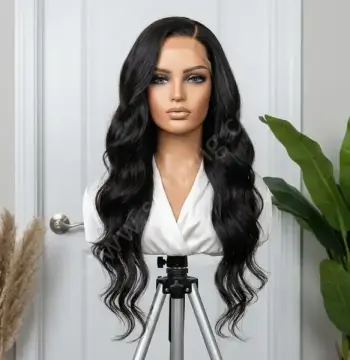
24" Body Wave HD Lace Front Human Hair Wig Rich Black with Bangs Pre-Plucked for Special Occasions
- Lengths
- 12" · 14" · 16" · 18" · 20" · 22" · 24"
- Lace
- 13x4 Lace · 13x6 Lace
- Cap
- Small · Medium · Large

Jet Black Bouncy Body Wave HD Lace Front Wig with Bangs for Black Women
- Lengths
- 12" · 14" · 16" · 18" · 20" · 22" · 24"
- Lace
- 13x4 Lace · 13x6 Lace
- Cap
- Small · Medium · Large

HD Lace Front Human Hair Wig Deep Chocolate Brown Body Wave Middle Part Pre-Plucked Natural Hairline Brazilian Hair
- Lengths
- 12" · 14" · 16" · 18" · 20" · 22" · 24"
- Lace
- 13x4 Lace · 13x6 Lace
- Cap
- Small · Medium · Large