How to measure for a wig cap
Measure the circumference of your head along your hairline, above your ears and around the nape — twice, with a soft tape. Most people land in medium, but the ones who don't are the ones who end up with a wig they never wear.
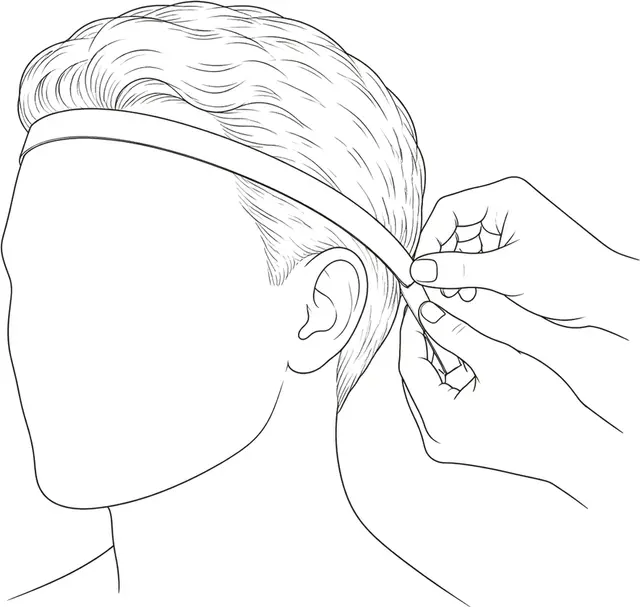
The measurement
You need a soft tape measure — the fabric kind. A metal builder’s tape will not follow the curve of a head and will give you a number that’s a little too small.
Start at the centre of your hairline at the front, where your own hair begins. Run the tape back along the hairline above one ear, around the base of your skull at the nape, back above the other ear, and return to where you started.
That’s your circumference. Write it down.
Repeat the measurement and compare the readings. A small change in tape tension or route can shift the result, and agreement between two attempts is more useful than confidence in a single pass.
Common measurement errors
Pulling the tape tight. People instinctively snug a tape measure. Here you want it lying against the head with no tension at all — the wig cap has to sit around your head, not compress it. A tape pulled firm can easily read half an inch small, which is most of the gap between two cap sizes.
Measuring over the wrong hair. Whatever’s under the wig on the day is what should be under the tape now. If you’ll wear your hair flat in a wig cap, measure with it flat. If you’ll have braids underneath, measure over the braids. A measurement taken over a loose ponytail is measuring something that won’t exist when you put the wig on.
Two readings that agree within a quarter of an inch means you’ve probably got it right. Two readings that disagree by more than that means one of the above happened.
What the sizes mean
Roughly, and with the caveat that sizing isn’t perfectly standardised across the industry — always check the seller’s own chart rather than assuming these carry across. For the wigs on this site that’s SoftWig’s size guide:
- Small — around 21 inches
- Medium — around 22 inches
- Large — around 23 inches
Most adults are close to medium, which is why medium is what people default to when they don’t measure. That default works for a lot of people and is quietly miserable for everyone else.
If you’re between sizes and the wig has adjustable straps — most do — choose the smaller one. Straps can take a cap in by about an inch. Nothing can let a cap out. A cap that’s slightly snug and adjusts down is a wig you’ll wear; a cap that’s slightly loose is a wig that shifts every time you turn your head.
What wrong feels like
Cap size problems rarely announce themselves on day one. They show up at hour six.
Too tight starts as fine and becomes a headache across the temples or a tender band where the edge sits. It leaves a mark on your forehead. People tend to assume this is just what wearing a wig is like. It isn’t.
Too loose is subtler and more annoying. The wig creeps backwards over a few hours, exposing more forehead than it should. You find yourself touching it constantly — pushing it forward, checking it in windows — which is both tiring and, ironically, the thing most likely to draw attention to it.
If either of those is your experience with a wig you already own, the cap size is the first thing to check, before you buy anything designed to hold it on better.
Why this is the spec that matters
Density, lace size, texture, shade — get any of those wrong and you have a wig you like less than you hoped. Get the cap size wrong and you have a wig you don’t wear.
That’s the whole argument. It’s a five-minute job with a tape measure, and it’s the difference between a purchase that works and one that sits in a box. Do it before you order, not after it arrives.
What to look for on a listing
- Cap
- Small ≈ 21", Medium ≈ 22", Large ≈ 23" circumference
Questions people ask
What if I'm between two sizes?
Go with the smaller one if the wig has adjustable straps, which most do. Straps can take a cap in by around an inch; nothing can let one out. A slightly snug cap that adjusts down is recoverable, a loose one is not.
Does hair underneath change the size I need?
Yes, and it's a common reason a measurement comes out wrong. Measure with your hair flat and secured the way you'd actually wear it under the wig. A high bun adds bulk that won't be there on the day, or will be there and won't fit.
How tight should a wig feel?
Secure but not gripping. You should be able to slide a finger under the edge without effort. If it leaves a mark on your forehead after an hour, it's too tight — and that's worth fixing rather than getting used to.
Can I fix a cap that's too big?
Partly. Adjustable straps take up about an inch, and that covers most near-misses. Beyond that you're into altering the cap, which is doable but not something we'd send someone off to do on a wig they've just bought.
From the catalogue
Where most people start
This page doesn't narrow the catalogue, so these are simply well-reviewed lace fronts rather than a match to anything above.

HD Lace Front Human Hair Wig Warm Chestnut Brown Wave Long Pre-Plucked Natural Hairline Brazilian Hair
- Lengths
- 12" · 14" · 16" · 18" · 20" · 22" · 24"
- Lace
- 13x4 Lace · 13x6 Lace
- Cap
- Small · Medium · Large
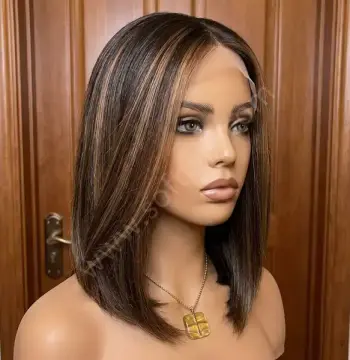
Soft Blonde Highlights over Brown Bone Straight HD Lace Front Human Hair Wig Short Bob for Bridal Hairstyles
- Lengths
- 10" · 12" · 14" · 16"
- Lace
- 13x4 Lace · 13x6 Lace
- Cap
- Small · Medium · Large
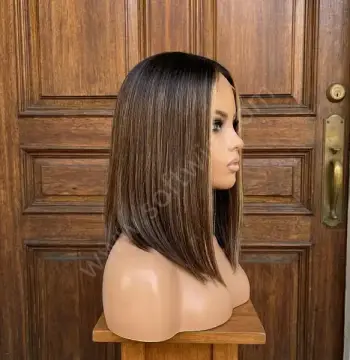
Ombre Blonde Brown with Highlights Sleek Straight HD Lace Front Human Hair Wig Short Bob Silky Soft for Casual Outings
- Lengths
- 10" · 12" · 14" · 16"
- Lace
- 13x4 Lace · 13x6 Lace
- Cap
- Small · Medium · Large

Density 180% Full Body Wave Medium Brown HD Lace Front Human Hair Wig for Black Women
- Lengths
- 12" · 14" · 16" · 18" · 20" · 22" · 24"
- Lace
- 13x4 Lace · 13x6 Lace
- Cap
- Small · Medium · Large