Wigs for older women
Start with a manageable length, moderate-looking volume and a shade that has natural variation. A convincing hairline matters, but so does being able to position and secure the wig by yourself in the light and mirror you use every day.
This is a good fit if
- Your own hair has thinned gradually and you want fullness back without a change of identity
- You want to put it on yourself, quickly, without anyone helping
- You'd rather look like you did ten years ago than like someone else entirely
Look elsewhere if
- You want a dramatic change of look and are prepared for the comment it draws
- You have very fine hair and no interest in learning how to secure a wig
- You only need something for one occasion — a topper may be less work
Three things decide this
Most wig advice is written for a customer in her twenties buying her first lace front. Very little of it addresses what actually changes.
Three things do most of the work here, and they aren’t the things listings emphasise.
A hairline that matches the face it’s on. Hairlines change with age — they soften, they recede slightly, the hair at the temples gets finer. A wig built with a dense, low, perfectly even hairline sits oddly against a mature face for the same reason a very dark flat colour does: it’s a younger person’s feature attached to yours, and the eye reads the mismatch before it reads the wig.
Weight you can wear all day. A wig you’re comfortable in at hour eight is one you’ll wear. Weight is density and length, in that order.
Being able to put it on alone. Every day, quickly, without asking anyone. This rules out some things that are otherwise perfectly good.
Length, texture and lace size are real decisions, but none of them will make or break this purchase.
Density is the single biggest lever
If you take one thing from this page: buy less hair than the photographs show you.
Nearly every ready-to-wear human hair lace front is built at 180% density, ours included, because it looks abundant in a product shot. That’s more hair than most adult heads grow at any age — the density that reads as real on most people sits closer to 130–150%, which is what the density guide goes into. So a full 180% announces itself on anyone. It tends to show up more against a mature face simply because the contrast with your own hairline is easier to see, and more so again if your hair has thinned.
Since you can’t easily buy a lower density in human hair, the fix is to have one made. Any competent stylist will thin a wig — taking weight out of the crown and around the parting with point-cutting or thinning shears. It costs a fraction of the wig, takes under half an hour, and it is the single most effective thing you can do to a wig bought off a listing. Ask for a light thinning at the crown and around the front; you can always go back for more.
The alternative lever is length. A chin-length wig at 180% carries far less visible bulk than a mid-back one at the same density, which is part of why shorter wigs read as more natural on most people.
The instinct is to want fullness back, and that instinct is sound. It’s just that fullness at the roots and around the parting is what reads as healthy hair. Sheer volume all over reads as a wig.
Leave the grey in
A flat dark shade next to a mature face is the second giveaway, and it’s easy to avoid.
Real hair, at any age, isn’t one colour. By sixty it’s usually three or four — silver at the temples, mid-brown through the back, something warmer where the light hits it. A wig in one solid dark brown or black has none of that variation, and against the skin tone it sits next to, the difference is visible.
Shades that keep some silver at the front are more convincing. They’re also easier to live with: a wig with grey in it matches whatever your own hair is doing at the edges, and it doesn’t need to be replaced when your natural colour shifts a shade further.
If you’d rather cover the grey entirely, do — this is a preference, not an error. Just go a shade or two lighter than the colour you remember having. Hair that’s darker than your face expects is the hardest thing to get away with.
Test whether you can fit it independently
This is the practical criterion nobody writes about, and it decides how much a wig gets worn.
Putting a wig on alone means: tilt your head forward, place the front edge where your own hairline is, pull the back down over the nape, stand up, adjust the straps, done. Two minutes with practice.
The things that make it harder are worth knowing before you buy:
Straps at the back need a bit of reach and a bit of grip. If your hands are stiff, look for hook-and-eye adjusters rather than fiddly sliders, and set them once rather than adjusting daily.
Combs are your friends — they position by feel, which is exactly what you need when you can’t see what you’re doing.
Adhesive is the thing to avoid. Not because it’s difficult in principle, but because laying a front edge accurately requires seeing your own hairline from the front, and doing that alone every morning is genuinely awkward.
Grip bands are worth skipping too. They hold well, and they concentrate pressure in one line, which fine hair and thinner skin tolerate less well than they used to.
Judge the final choice in your own bathroom, using your normal mirror and light. A wig you can position and secure without help is more likely to become part of your routine.
Shorter is easier, and not for the reason people say
You’ll be told repeatedly that short hair is more appropriate past a certain age. That’s a preference dressed up as a rule, and it’s not the argument.
The real arguments for chin-to-shoulder length are physical. Less hair is less weight on the cap, which is the difference between comfortable and aware-of-it by mid-afternoon. It’s less to brush out and less to dry. It sits above the collar, which is where most of the tangling on a longer wig comes from. And it holds its shape without styling, so it looks the same on a day when you haven’t got the energy to do anything to it.
Those are practical benefits, and they’re available whatever you think of the look.
If you want length, buy length. Just have it thinned, and expect to spend a few minutes a day on it that a shorter wig wouldn’t ask for.
If you still have some hair
Worth saying plainly, because it’s often the better answer: if your thinning is at the parting or the crown and the sides and back are still reasonable, a topper does a smaller, cheaper, cooler job than a full wig.
A topper clips into the hair you have and fills in the area that’s showing. It blends with your own colour as it changes, it’s much less to wear on a warm day, and nobody has to learn to fit anything.
A full wig may suit general thinning, eliminate daily blending, or avoid clips in hair that is too fine to support them comfortably. Compare both options before paying for coverage you may not need.
What to look for on a listing
- Material
- Human hair — it moves and reflects light like the hair you had
- Density
- 180% on anything you can buy off a listing. Have the crown thinned — this is the line that matters most
- Length
- Chin to shoulder. Long hair reads younger in a photo and heavier all day
- Shade
- Your colour with the grey left in, not a flat block of brown or black
- Cap
- Measured size, adjustable straps, no grip band
- Attachment
- Glueless, with combs you can reach without help
Questions people ask
Should I cover the grey completely?
Not unless you want to. A wig with no grey at all next to a mature face is the most common reason a wig reads as a wig — the eye expects some variation and a flat block of colour looks painted on. Shades that keep some silver through the front are considerably more convincing and, in most people's view, better looking.
Is long hair a mistake after a certain age?
No, and anyone who says otherwise is stating a preference as a rule. The honest considerations are practical: long hair is heavier on the cap, warmer, takes longer to detangle, and catches on collars all day. If you like it and you don't mind the upkeep, wear it.
Can I put a wig on by myself?
Yes, and it's a two-minute job once you've done it a few times — tilt forward, place the front edge at your hairline, pull the back down, then adjust. The parts that need dexterity are the straps at the back, which is why they're worth checking before you buy. Anything requiring adhesive at the hairline is much harder alone.
My hair is thin rather than gone — do I need a full wig?
Possibly not. If you still have reasonable coverage at the sides and back and the thinning is at the crown or the parting, a topper does a smaller job with less commitment. A full wig makes more sense when thinning is general or when you'd rather not think about it at all.
Will a wig damage what hair I have left?
Not if it's held on sensibly. What causes trouble is constant tension in one place — clips gripping the same few spots daily, or a grip band worn tight against a fine hairline. Move the clips, keep the straps comfortable rather than tight, and speak to a doctor if you notice soreness or new thinning where something sits.
Matching wigs
What we'd point you at
Filtered on texture, length, shade. Cap, lining and attachment aren't in the catalogue data, so check those on the product page.
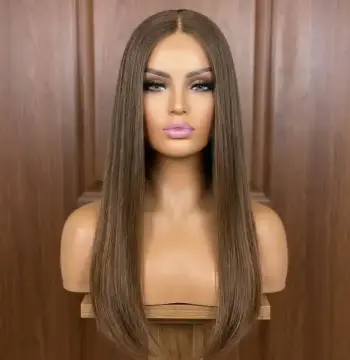
Premium Brown Silk Straight HD Lace Front Human Hair Wig 20" Glueless Cap
- Lengths
- 12" · 14" · 16" · 18" · 20" · 22" · 24"
- Lace
- 13x4 Lace · 13x6 Lace
- Cap
- Small · Medium · Large

HD Lace Front Human Hair Wig Chestnut Brown Straight Side Part Pre-Plucked Natural Hairline Brazilian Hair
- Lengths
- 12" · 14" · 16" · 18" · 20" · 22" · 24"
- Lace
- 13x4 Lace · 13x6 Lace
- Cap
- Small · Medium · Large

Ash Brown HD Lace Front Wig Straight Glueless Swiss Lace Pre-Plucked
- Lengths
- 12" · 14" · 16" · 18" · 20" · 22" · 24"
- Lace
- 13x4 Lace · 13x6 Lace
- Cap
- Small · Medium · Large

HD Lace Front Human Hair Wig Natural Dark Brown Straight Mid-Length Pre-Plucked Natural Hairline Brazilian Hair
- Lengths
- 12" · 14" · 16" · 18" · 20" · 22" · 24"
- Lace
- 13x4 Lace · 13x6 Lace
- Cap
- Small · Medium · Large