Choosing a wig for a wedding
Order at least eight weeks ahead and complete two full trial wears before the wedding. Test the wig with camera flash, then wear it for several hours in similar conditions so shine, heat or a poor cap fit can be corrected while there is still time.
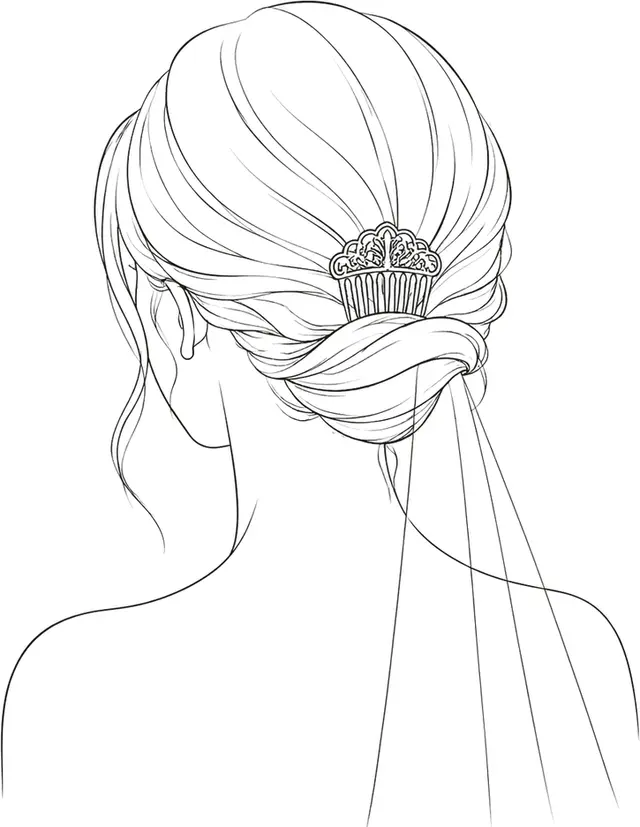
This is a good fit if
- You're the bride, or in the party, and the day is photographed heavily
- You want a rehearsal — two, ideally — before it matters
- You'd rather over-prepare a wig than improvise on the morning
Look elsewhere if
- The wedding is next week — in which case skip to the last section
- You want one wig that does the wedding and daily wear equally well
- You're happy to hand the whole problem to a stylist and don't want a timeline
The timeline
Weddings are the one wig purchase with a hard deadline, so the useful thing to give you is dates rather than advice.
Eight weeks out — order. Two wigs if the budget allows and you’re undecided; returning one is easier than regretting the other. Order the length and texture you want for the actual style, not something you’ll fight into shape.
Seven weeks out — wear it for a full day. Not a try-on. A whole day, at home or out, with a coat and a car journey. This is when cap fit tells you the truth, and when you find out whether the length gets caught in things.
Six weeks out — decide on a stylist. If you want a trim, layers, or an updo, talk to them now with the wig in hand. Ask directly whether they work on wigs. Some are excellent; some will say no, and it’s much better to hear that now.
Four weeks out — trial run. Full styling, ideally with whatever you’ll wear on the day near your face — a veil, a headpiece, earrings. Photograph it. With flash, in daylight, and in artificial light. This is the step people skip and it’s the one that catches shine.
Two weeks out — last wash. Human hair looks its best a few days after washing rather than the same day, and this leaves room for a second wash if you decide you need one.
One week out — stop changing things. Whatever isn’t right by now stays as it is. Late trims and late colour decisions are how good wigs get ruined.
The day before — final set, then leave it alone. On a stand, out of the way, away from anyone helpful.
Photographs are the real test
A wedding is the most photographed day most people ever have, from every angle, often with flash, sometimes for eight hours.
Two things show up in photographs that don’t show up in your mirror.
Shine. Flash is a hard, direct light source, and very glossy hair returns it as a bright band. In person, that same hair reads as healthy. This is why synthetic fibre — which has a consistent surface and reflects light uniformly — is the riskier choice for a heavily photographed day, and why human hair with a slightly matte finish photographs more like hair.
Hairline position. A camera is unforgiving about proportion in a way that a mirror isn’t, because you look at your reflection as a whole and a photograph as a shape. A wig sitting even half an inch too high changes the proportions of a forehead noticeably. This is worth checking in photographs at the trial rather than trusting your eye.
Take pictures at the trial. With flash, without, in daylight, and in warm indoor light. Fifteen minutes of that will tell you more than any amount of mirror time.
Up or down decides which wig to buy
If there’s a chance you want your hair up, decide before you order, because it isn’t a styling decision — it’s a purchase decision.
Pulling hair back moves the visible edge of the lace further from your hairline and exposes more of the parting area. A 13x4 lace front, which is entirely convincing worn down, starts to look like a wig when the hair is pulled up tight and the cap edge comes into view.
Updos want more lace depth, and they want enough length to work with. A half-up style is more forgiving. Fully down is the easiest thing to get right and the most reliable choice if you’re not working with a stylist.
None of this means an updo is off the table. It means the wig has to be bought for it.
Heat, and a long day
Wedding days are long, often warm, frequently indoors under lighting designed for atmosphere rather than comfort, and involve a great deal of standing.
Density is where this bites. 180% is a defensible choice for a wedding in a way it isn’t for daily wear — it photographs beautifully and holds a style all day. Just know that it’s warmer, and if the wedding is in July in a marquee, that matters.
A comfortable liner can absorb perspiration and keep the cap cleaner during a long event. If you plan to use adhesive, rehearse the complete application and removal in similar heat or have an experienced fitter apply it on the day.
If the wedding is next week
The eight-week version isn’t available to you, so here’s the compressed one.
Buy in your own colour family, medium length, worn down, at your measured cap size. Don’t order anything you’d need to have altered. Wear it for one full day as soon as it arrives — that day is not optional, it’s the only test you get. Photograph it with flash. And if it doesn’t sit right, the fix is almost always the position rather than the wig: bring the front edge forward to where your own hairline is.
A plain wig that fits, worn down, looks good in photographs. A more ambitious one, unrehearsed, is a gamble on a day you can’t repeat.
What to look for on a listing
- Material
- Human hair — it takes a set, and it photographs without glare
- Density
- 180% is defensible here, where it isn't for daily wear
- Length
- Long enough to style, and decide up or down before you order
- Shade
- Warmer than you think reads well under evening light
- Cap
- Measured size, and glueless is fine unless a stylist advises otherwise
- Attachment
- Straps and combs for most people; adhesive only if you've used it before
Questions people ask
How far ahead should I order?
Eight weeks is comfortable, six is workable, and anything under three is tight if you want a second option or a trim. The time isn't for delivery — it's for wearing it a couple of times, discovering something you want to change, and having room to change it.
Can a stylist work on a wig?
Most can, and many are glad to, but ask rather than assume — some salons don't take wig work and some are excellent at it. Bring the wig to a consultation before the trial, and be clear about what's fixed and what isn't. A trim and a set are straightforward; a colour change is a bigger conversation.
Will it show in the photographs?
The wig won't. Shine will, and so will a hairline sitting too high. Flash is much harder on very glossy hair than daylight is, which is one reason human hair at a slightly matte finish is the safer buy for a heavily photographed day.
Can I have it up?
Yes, within limits — most updos need enough lace depth to keep the front looking natural once hair is pulled back, and a 13x4 will look wrong pulled up hard. Decide up or down before you order, because it changes which wig you should buy.
What if it moves during the day?
A correctly sized cap with the straps adjusted doesn't move much, and combs handle the rest. If you're dancing, or it's windy, or you want to stop thinking about it entirely, that's the one occasion where adhesive genuinely earns its place — applied by someone who's done it before, not for the first time that morning.
Matching wigs
What we'd point you at
Filtered on texture, length. Cap, lining and attachment aren't in the catalogue data, so check those on the product page.
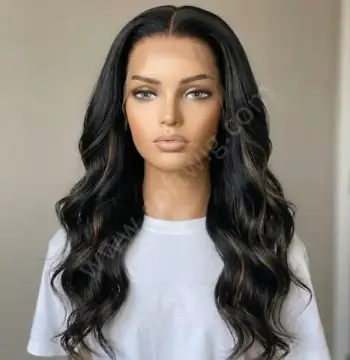
18" Soft Body Wave HD Lace Front Human Hair Wig Black Base with Blonde Brown Highlights Silky Soft for Holiday Glam
- Lengths
- 12" · 14" · 16" · 18" · 20" · 22" · 24"
- Lace
- 13x4 Lace · 13x6 Lace
- Cap
- Small · Medium · Large

20" Honey Blonde Highlight Body Wave HD Lace Front Human Hair Wig Natural Black Roots
- Lengths
- 12" · 14" · 16" · 18" · 20" · 22" · 24"
- Lace
- 13x4 Lace · 13x6 Lace
- Cap
- Small · Medium · Large

Jet Black Bouncy Body Wave HD Lace Front Wig with Bangs for Black Women
- Lengths
- 12" · 14" · 16" · 18" · 20" · 22" · 24"
- Lace
- 13x4 Lace · 13x6 Lace
- Cap
- Small · Medium · Large
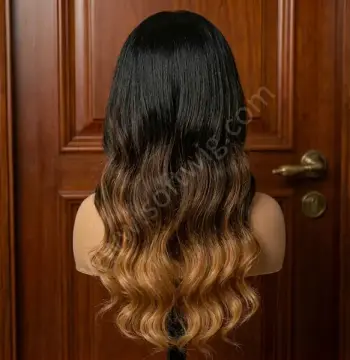
Brazilian Human Hair HD Lace Front Wig Body Wave Honey Blonde Pre-Plucked Natural Hairline
- Lengths
- 12" · 14" · 16" · 18" · 20" · 22" · 24"
- Lace
- 13x4 Lace · 13x6 Lace
- Cap
- Small · Medium · Large