Lace front or full lace?
A lace front has lace around the front hairline with a wefted cap behind it. A full lace wig is hand-tied across the cap, allowing more parting and updo options. Full lace costs more and needs gentler handling, so its extra flexibility makes sense mainly for people who will use it.
| Dimension | Lace front | Full lace |
|---|---|---|
| Construction | Lace across the front hairline, machine-made cap behind | Hand-tied lace across the entire cap |
| Parting | Anywhere within the lace area at the front | Anywhere on the head, including the crown and the nape |
| Can the hair go up? | A low ponytail at best — the cap edge shows if you pull it up | Yes, including a high ponytail or an updo |
| Breathability | Good at the front, less so across the cap | Better all over, which matters in heat |
| Durability | The sturdier of the two — most of the cap is machine-made | More fragile. Lace can tear anywhere on the cap, not just at the front |
| Handling | Straightforward, holds its shape off the head | Needs care putting on and taking off; less structure |
| Price | The standard, and considerably cheaper | A substantial premium for the hand-tied construction |
Pick Lace front if
You wear your hair down, or down and half-back, which is most people most of the time. It's sturdier, cheaper, easier to handle, and the visible difference when the hair is worn down is essentially nil.
Pick Full lace if
You genuinely wear your hair up — high ponytails, updos, hair off the neck in summer — or you need to part it at the crown. It's also the more comfortable option in real heat, if the price difference is affordable.
Where the extra lace changes styling
Both constructions solve the same problem — making hair look like it grows from your head — and they solve it over different areas.
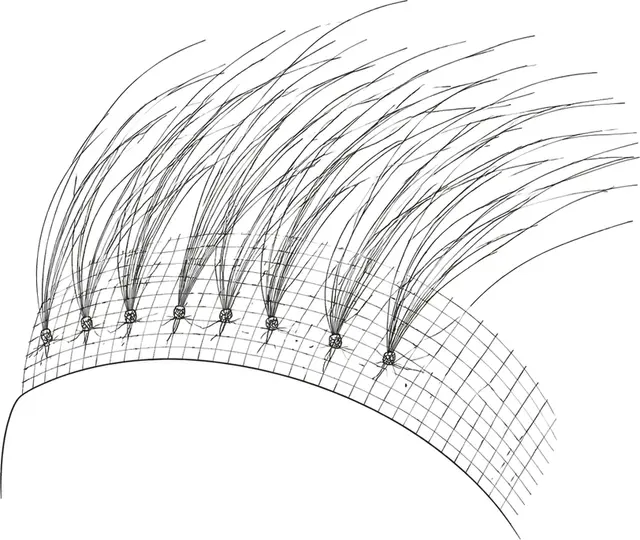
A lace front has a panel of fine lace across the front hairline, typically 13 inches wide and 4 or 6 inches deep. Behind that panel, the cap is machine-made: wefts of hair sewn in rows onto a stretch fabric base. It’s sturdy, it holds its shape, and it’s what almost the entire market sells.
A full lace wig is lace across the whole cap, with every strand tied to the mesh by hand. There are no wefts and no fabric base. The hair can be parted anywhere on the head, and pulled in any direction, because there’s no construction underneath to expose.
That’s the whole distinction. Everything else — price, durability, comfort, handling — follows from it.
The question that decides it
Do you wear your hair up?
Not “would you like to be able to”. Actually, in practice, in the last month — did you tie your hair up?
If the answer is no, or rarely, a lace front gives you everything a full lace wig would, at a fraction of the price. Worn down, the two are visually indistinguishable, because the only lace anyone can see is at the front and both have it there.
If the answer is yes — a high ponytail for the gym, hair off your neck in summer, an updo for work — then you need lace where the hair will be pulled from, and that’s what full lace is for. A lace front pulled up hard shows the boundary where the lace ends and the wefts begin, and that boundary is unmistakably a wig.
Base the choice on hairstyles you already wear. Paying for all-over parting and updo freedom has little benefit if the hair will normally stay down with the same front part.
The durability trade
Worth being direct about, because it runs against the intuition that the pricier option must be the more robust one.
Lace is delicate. That’s the point of it — it’s fine enough to disappear against skin, which necessarily means it’s fine enough to tear. On a lace front, that fragility is confined to the front panel, and the rest of the cap is comparatively tough machine-made construction. On a full lace wig, the whole cap is the delicate part.
In practice this means full lace wigs need more careful handling every time they go on and off, they hold their shape less well when not being worn, and a tear at the crown or the nape is both more likely and harder to repair than a front-edge problem. Repairs to hand-tied lace are specialist work.
So the full lace premium buys parting freedom and breathability, and it does not buy longevity. If anything it costs some.
Where full lace genuinely wins beyond parting
Two things, and heat is the one people underestimate.
Breathability. An all-lace cap is essentially mesh across your whole scalp, and it moves air far better than a fabric cap does. In genuinely hot weather, or for anyone whose scalp gets itchy when warm, that’s a real comfort difference over a long day rather than a marketing claim.
Crown parting. If you want a part running back toward the crown, or you want to change where the part sits regularly, only full lace supports it. A 13x6 lace front gets you six inches back from the hairline, which covers most partings but not a full centre part to the crown.
The middle option
If pulling the hair back is occasional rather than routine, 360 lace is worth knowing about: lace around the entire perimeter of the head with a machine-made crown.
That combination allows a low or mid ponytail — the lace continues round the nape, so there’s no visible boundary when the hair is gathered — while keeping the sturdier construction and much of the price advantage at the crown.
For someone who ties the hair back a few times a week, 360 lace can provide useful access at the nape without the price and fragility of an all-lace cap.
What we recommend, and the disclosure
Every wig we point you at is a lace front. We don’t stock full lace, and you should read this comparison knowing that.
The reason is that our sister shop is built around daily wear, and for daily wear the lace front is the more sensible construction — sturdier, cheaper, easier to handle in a hurry, and visually identical for anyone wearing their hair down. That’s the honest reasoning, and it also happens to suit us, which is why we’d rather state it than leave you to work it out.
If you wear your hair up routinely, buy full lace. That’s a real requirement and a lace front will disappoint you at exactly the moment you notice it.
Questions people ask
Is full lace more natural-looking?
Only where you expose it. Worn down, a good lace front and a full lace wig look the same, because the only visible area is the front hairline and both have lace there. The difference appears the moment you pull the hair back.
Can I put a lace front wig in a ponytail?
A low one at the nape, often yes, depending on the cap. Anything higher exposes the point where the lace ends and the cap begins, and that edge is what reads as a wig. This is the practical limit that decides the whole comparison.
Why is full lace so much more expensive?
Labour. Every strand on a full lace cap is tied to the mesh by hand, across the entire head, rather than sewn in machine-made rows behind the hairline. It's a great deal more work, and the price reflects that rather than better hair.
Is full lace more fragile?
Yes. Lace is delicate wherever it is, and a full lace cap is delicate everywhere rather than just at the front. Tears at the crown or the nape are difficult to repair and are the common way these wigs end their lives.
What about 360 lace?
A middle option — lace around the entire perimeter with a machine-made crown. It allows a low or mid ponytail without the price of full lace, and it's a reasonable compromise if pulling hair back is occasional rather than routine.
From the catalogue
Where most people start
This page doesn't narrow the catalogue, so these are simply well-reviewed lace fronts rather than a match to anything above.

HD Lace Front Human Hair Wig Black-Red Ombre Wave Ombre Pre-Plucked Natural Hairline Brazilian Hair
- Lengths
- 12" · 14" · 16" · 18" · 20" · 22" · 24"
- Lace
- 13x4 Lace · 13x6 Lace
- Cap
- Small · Medium · Large

Effortless Wave Copper Orange Ombre HD Lace Front Human Hair Wig 18" Luxe Brazilian
- Lengths
- 12" · 14" · 16" · 18" · 20" · 22" · 24"
- Lace
- 13x4 Lace · 13x6 Lace
- Cap
- Small · Medium · Large
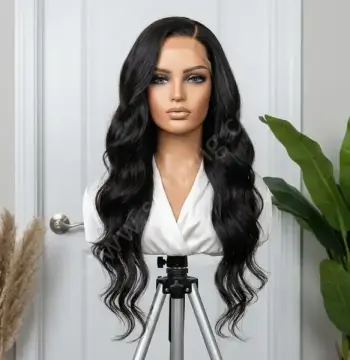
24" Body Wave HD Lace Front Human Hair Wig Rich Black with Bangs Pre-Plucked for Special Occasions
- Lengths
- 12" · 14" · 16" · 18" · 20" · 22" · 24"
- Lace
- 13x4 Lace · 13x6 Lace
- Cap
- Small · Medium · Large

Natural Black Wave HD Lace Front Human Hair Wig with Bangs Pre-Plucked Hairline Glueless
- Lengths
- 12" · 14" · 16" · 18" · 20" · 22" · 24"
- Lace
- 13x4 Lace · 13x6 Lace
- Cap
- Small · Medium · Large