Wigs for a sensitive or reactive scalp
Only three things touch your scalp — the cap lining, the seams, and whatever holds the wig on. Choose those three deliberately and the rest of the wig is a style decision. Most reactions people blame on a wig come from the grip band or the adhesive, not the hair.
A note on health
This is a shopping guide, not medical advice. Hair loss has a lot of possible causes and some of them are worth investigating properly — if yours is sudden, patchy, or comes with a sore or broken scalp, that is a conversation for a doctor or a dermatologist before it is a shopping decision. Organisations like the American Academy of Dermatology and the Mayo Clinic are reasonable places to start reading.
This is a good fit if
- Your scalp reacts to things — bands, elastic, adhesive, or heat
- You've had itching or soreness from a previous wig and want to know which part caused it
- You wear a wig for long days and comfort is the deciding factor
Look elsewhere if
- You have broken skin, an active rash or an unexplained sore scalp — see someone about that first
- You need maximum hold for an event and are willing to trade comfort for it
- You're looking for a treatment rather than something comfortable to wear
The four contact points to check
Most wig shopping is about hair. Almost none of the hair touches your scalp.
If your skin is reactive, the useful move is to ignore the part you can see and go through the short list of things that make contact. There are only four, and they’re worth ranking by how often they cause trouble.
1. Whatever holds the wig on. Adhesive, tape, or a silicone grip band. This is the source of most complaints by a wide margin — adhesives are the obvious suspect, but a grip band is the quieter one, because it works so well that people don’t connect the sore strip along their hairline with the thing holding the wig still.
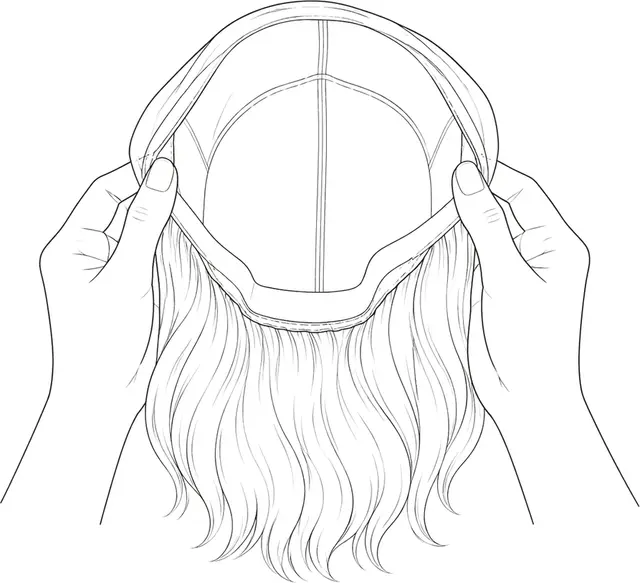
2. The cap lining. The fabric across the crown and around the sides. Smooth stretch mesh is comfortable; anything with a coarse weave or a stiff finish is felt within the hour.
3. Seams and edges. Where panels join, where the lace meets the cap, and the ear tabs. Flat, low-profile seams are worth looking for. A stiff cut edge along trimmed lace is a common irritant and easy to miss because it feels fine when you’re holding the wig.
4. Heat. Not a material, but it belongs on the list, because a hot scalp itches regardless of what it’s wearing. Density and cap construction control this more than material does.
Everything else on a product page — texture, length, lace size, parting — is a style decision you can make freely.
The grip band trade-off
It’s worth being specific about this one, because grip bands are widely recommended and they genuinely work.
A velvet or silicone band sits around the perimeter of your head, under the wig, and stops it sliding. The wig stays exactly where you put it, which is a real benefit if you’re active or if your own hair is fine and slippery.
The cost is that all the holding force is concentrated in a narrow strip, and that strip doesn’t move all day. On most people that’s fine. On a reactive scalp it produces exactly what you’d expect from constant friction and pressure in one place — a warm, itchy line that’s often mistaken for a reaction to the wig itself.
If you’ve had trouble and you wear a band, take the band out first. It’s the cheapest test available and it resolves a good proportion of cases.
Reducing heat and pressure
Density is the lever people don’t think to pull.
A wig described as 180% density has a lot of hair packed into the cap. It photographs well, it reads as luxurious, and it has become the default on ready-to-wear human hair listings — every wig we recommend is built at it, and lower-density human hair wigs, while they exist, are genuinely hard to find in a specific length, texture and colour. It also traps heat against your scalp and weighs more, and both work against you at hour six.
Since you probably can’t buy your way out of it, the two things that work are length and thinning. A 14-inch wig at 180% carries far less weight and heat than a 24-inch one at the same density, so length is the lever you have at the point of purchase. And a stylist can thin the crown of an existing wig — twenty minutes, no visible difference in a photograph, a noticeable difference by mid-afternoon. If your scalp gets itchy when you’re warm, those two do more for you than any cap upgrade.
The same logic makes a case for shorter lengths, and against wearing anything under the cap in summer. It’s all the same variable.
Adhesive, if you want to use it
Nothing here says you can’t. Plenty of people with sensitive skin wear glue without incident, and a well-laid front is the most convincing part of a good wig.
Three things reduce the risk. Patch test on your inner arm and leave it for a day, rather than testing on your hairline. Use the smallest amount that works, along the very edge only, rather than a wide band. And remove it properly with a purpose-made remover instead of pulling — most of the damage attributed to adhesive is actually from removal.
If your skin does react, the sequence to check is adhesive first, then removal method, then the lace edge itself. All three get blamed on each other regularly.
When it isn’t the wig
The honest limit of this page: an itchy scalp has a lot of possible causes, and a wig is only one of them.
If your scalp is sore rather than itchy, if the skin is broken or flaking, if the itching came on suddenly without a change in what you’re wearing, or if it doesn’t settle when you stop wearing the wig for a few days — that’s worth getting looked at rather than shopped for. Organisations like the American Academy of Dermatology publish plain-language material on scalp conditions, and a GP can rule out the things that need treating rather than accommodating.
Do not put a wig over broken, painful or actively inflamed skin. Pause wear and seek clinical advice until the scalp is ready for contact again.
A reasonable starting spec
If you want the short version: human hair, kept short enough to be light, a smooth-lined cap in your measured size, held on with the straps and combs it came with, no band, no adhesive, and a soft liner if you find seams noticeable.
That combination gives up almost nothing in appearance. It gives up some certainty about the wig staying put in wind, which is what the band and the glue were buying you — and which most people can live without once they’ve felt the difference at the end of a long day.
What to look for on a listing
- Material
- Human hair — cooler over long wear than synthetic
- Density
- 180% on anything you can buy off a listing — offset it with a shorter length, or have the crown thinned
- Length
- Whatever you like — length doesn't touch your scalp
- Cap
- Smooth stretch lining, flat seams, no silicone grip strip
- Attachment
- Adjustable straps and combs, no adhesive, no grip band
Questions people ask
Is human hair or synthetic better for a sensitive scalp?
Neither material sits against your scalp — the cap does. Where it matters is heat: human hair breathes better over a long day, and being too warm makes an itchy scalp much worse. Some people also react to the fibre coating on new synthetic hair, which usually settles after a wash.
Why does my wig itch at the front?
The most common causes, in order, are adhesive residue, a lace edge that's been trimmed with scissors and left with a stiff cut edge, and heat. All three are fixable. Itching that comes with redness or broken skin is a different matter and worth showing someone.
Can I wear a wig with eczema or psoriasis on my scalp?
Many people do, and a smooth-lined cap without adhesive is usually tolerable. But how your skin behaves is specific to you and to how active it is at the moment — that's a question for your GP or dermatologist rather than for a shopping guide.
Do grip bands cause problems?
They solve one problem and create another. Silicone or velvet bands hold a wig beautifully still, and they also apply constant pressure and friction to a narrow strip of scalp. For a sensitive scalp they're usually the first thing to remove.
Should I wear a liner underneath?
A soft bamboo or cotton liner puts a smooth layer between you and every seam, and many people find it the single biggest comfort improvement. Skip any liner with a tight elastic edge — that reintroduces the pressure you were trying to avoid.
Matching wigs
What we'd point you at
Filtered on texture, length. Cap, lining and attachment aren't in the catalogue data, so check those on the product page.
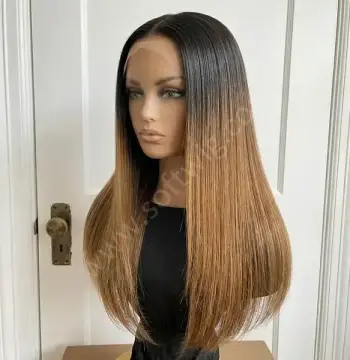
Medium Brown Ombre Blend Silky Straight HD Lace Front Human Hair Wig 13x4 HD Lace for Black Women
- Lengths
- 12" · 14" · 16" · 18" · 20" · 22" · 24"
- Lace
- 13x4 Lace · 13x6 Lace
- Cap
- Small · Medium · Large
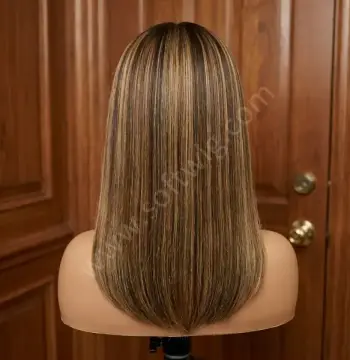
Brown Highlights Straight HD Lace Front Human Hair Wig Pre-Plucked Hairline Glueless
- Lengths
- 12" · 14" · 16" · 18" · 20" · 22" · 24"
- Lace
- 13x4 Lace · 13x6 Lace
- Cap
- Small · Medium · Large

Ash Brown HD Lace Front Wig Straight Glueless Swiss Lace Pre-Plucked
- Lengths
- 12" · 14" · 16" · 18" · 20" · 22" · 24"
- Lace
- 13x4 Lace · 13x6 Lace
- Cap
- Small · Medium · Large

13x4 HD Lace Sleek Straight Soft Ombre Brown HD Lace Front Human Hair Wig for Everyday Effortless Style
- Lengths
- 12" · 14" · 16" · 18" · 20" · 22" · 24"
- Lace
- 13x4 Lace · 13x6 Lace
- Cap
- Small · Medium · Large