How to store a wig properly
Overnight it goes on a stand, dry and brushed out. Between wearings it stays on the stand. For long-term storage it comes off the stand, gets a satin bag and a box, and lies somewhere dark and dry. The mistake nearly everyone makes is storing a wig that isn't fully dry.
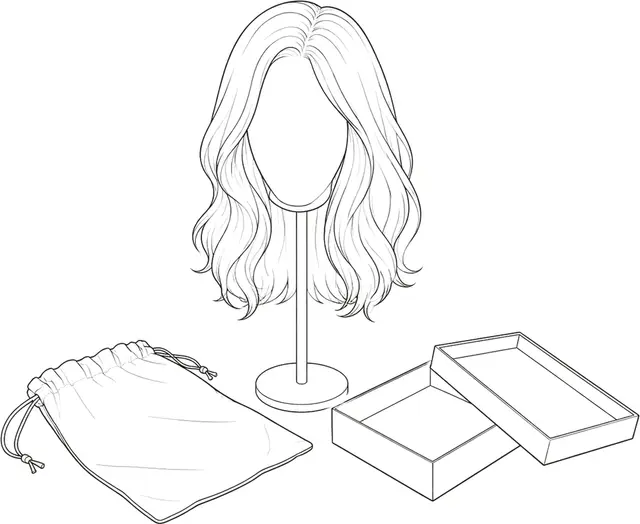
Three jobs, not one
“How do I store my wig” is really three questions with different answers, and most advice muddles them together.
Overnight, when the wig will be worn again in the morning. The goal is keeping its shape and letting the cap dry out.
Between wearings, when it might be days or weeks. The goal is the same plus keeping dust off.
Long-term, when it’s months — a second wig, a seasonal one, or something you’re keeping for occasional use. The goal changes: now you’re protecting against moisture, light and being crushed, and a stand is actively the wrong answer.
Problems usually begin when an overnight storage method is used for months, or when the wig is put away before it is completely dry.
The step all three share: it must be dry
This is the whole subject in one line. A wig stored damp is a wig you’ll be disappointed by.
A wig worn all day picks up moisture — perspiration at the cap, humidity in the hair, rain. Put it away in that state and three things happen: the cap develops a musty smell that’s difficult to remove, damp fibre pressed against damp fibre at the nape mats, and if it’s sealed in plastic, you’ve built the ideal conditions for mildew.
“Dry” means dry at the cap, not just dry-feeling at the ends. The lining and the seams hold moisture longest, and they’re the part you can’t see. If you’ve washed it, that’s several hours on a stand at minimum and overnight for anything long or textured. If you’ve simply worn it, an hour or two out in the air is usually enough — but check the inside of the cap with the back of your hand before it goes anywhere.
Overnight, and between wearings
The answer here is short: a stand, brushed out, out of direct sunlight.
A stand or a mannequin head. A folding stand is inexpensive and takes almost no space; a mannequin head holds the cap’s shape more faithfully and is better if you also style on it. Either is a significant improvement on a shelf, a drawer or the back of a chair, all of which crush the cap and flatten the crown.
Brushed out before it goes away, not after. Tangles that sit overnight tighten. Thirty seconds with a wide-tooth comb from the ends upward is the difference between a two-minute morning and a ten-minute one.
Out of the sun. Direct sunlight fades human hair, particularly anything coloured or with highlights, and a wig that sits on a windowsill will lighten unevenly over a few months. Anywhere that isn’t a window is fine.
Not in the bathroom, if you can help it. Steam every morning and evening keeps the cap perpetually slightly damp, which is the thing you’re trying to avoid.
Long-term, where the advice reverses
For months rather than days, take the wig off the stand.
The reason is that a cap left stretched over a form for a long period can stay stretched — the elastic relaxes into the shape it’s held in, and a wig that comes off a stand after a year can be looser than it was. It’s not a dramatic effect, but it’s real, and it’s the one storage mistake people make while trying to be careful.
The sequence for long storage:
Wash it, if it’s been worn. Product and oils left in the cap for months are exactly what produces the smell people find on unpacking. Then dry it completely — overnight or longer.
Brush it out gently, and put textured hair in a loose braid to keep the pattern from tangling against itself.
Satin or silk bag. Not plastic, which traps moisture, and not paper, which lets everything in. Most wigs arrive with something suitable, and if yours didn’t, a satin pillowcase does the job.
Then a box. The bag stops friction and dust; the box stops compression. A shoebox is fine. What matters is that nothing heavy sits on it.
Somewhere dark, dry and stable. A wardrobe shelf is ideal. A loft or a garage isn’t — temperature swings and humidity are hard on human hair over a year.
How storage damage begins
Worth knowing so you can prioritise, because not everything needs equal protection.
The nape mats. Same failure as in wear, different cause: compression rather than friction. Hair pressed against itself in a folded position for weeks tangles at the point of pressure. This is what the bag-and-box arrangement prevents.
The cap loses shape. Either crushed flat in a drawer, or stretched over a stand for a year. Both are avoidable with the right choice for the timescale.
The colour fades. Sunlight, and it’s irreversible. Highlights and lighter shades show it first.
The lace creases. A wig folded with the front edge bent will hold that crease. Store it so the front lies flat or curves naturally, not folded across itself.
The cheap version, if you’re not buying anything
If you’d rather not spend on a stand tonight: the inside of a clean saucepan, upside down, holds a wig’s cap shape surprisingly well. A rolled towel inside the cap works too. Both are better than a flat shelf.
This makeshift setup is temporary, but it preserves both essentials: the cap keeps its shape and air can circulate through it. A simple stand is the better long-term option for a wig worn regularly.
What to look for on a listing
- Material
- Human hair prefers a satin or silk bag for long storage, not plastic
- Cap
- A stand or mannequin head keeps the cap in shape for daily storage
Questions people ask
Do I need a wig stand?
For anything you wear regularly, yes — it's the cheapest thing you can buy that measurably extends a wig's life. It keeps the cap in shape, lets the inside dry out properly, and stops the hair being crushed overnight.
Is a mannequin head better than a folding stand?
For styling, yes, because it holds the shape of a head. For overnight storage a folding stand is fine and takes less room. What matters more is that the wig is on something rather than on a shelf.
Can I store a wig in a plastic bag?
Not for long, and not if there's any chance it's damp. Plastic holds moisture against the fibre, which is how mustiness and mildew start. A breathable satin or silk bag is the right choice for long storage.
How do I store a wig for months?
Clean and completely dry, gently brushed out, in a satin bag inside a box, somewhere dark and dry at a stable temperature. Off the stand — long periods on a stand can leave a wig stretched at the cap.
Do I need to wash a wig before storing it?
Yes, if it's been worn much. Product residue and skin oils left in the cap for months are what produce the smell people find when they take a wig out again. Then dry it completely, which takes longer than you think.
From the catalogue
Where most people start
This page doesn't narrow the catalogue, so these are simply well-reviewed lace fronts rather than a match to anything above.

HD Lace Front Human Hair Wig Cool Brown Wave with Fringes Pre-Plucked Natural Hairline Brazilian Hair
- Lengths
- 12" · 14" · 16" · 18" · 20" · 22" · 24"
- Lace
- 13x4 Lace · 13x6 Lace
- Cap
- Small · Medium · Large

HD Lace Front Human Hair Wig Warm Brown Wave Balayage Pre-Plucked Natural Hairline Brazilian Hair
- Lengths
- 12" · 14" · 16" · 18" · 20" · 22" · 24"
- Lace
- 13x4 Lace · 13x6 Lace
- Cap
- Small · Medium · Large

HD Lace Front Human Hair Wig Warm Brown Wave Middle Part Pre-Plucked Natural Hairline Brazilian Hair
- Lengths
- 12" · 14" · 16" · 18" · 20" · 22" · 24"
- Lace
- 13x4 Lace · 13x6 Lace
- Cap
- Small · Medium · Large

Gradient Ombre Brown Silky Straight HD Lace Front Human Hair Wig Short Bob for Bridal Hairstyles
- Lengths
- 10" · 12" · 14" · 16"
- Lace
- 13x4 Lace · 13x6 Lace
- Cap
- Small · Medium · Large