Choose and tint wig lace for your skin tone
Compare clean lace against your forehead in indirect daylight. Choose the closest available depth, then tint only if the edge still looks pale or ashy. Start lighter than the final result, test away from the hairline, and build colour in thin, dry layers.
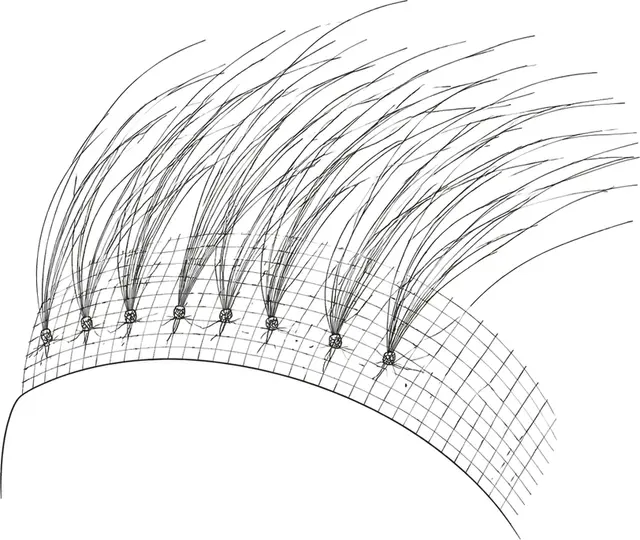
Lace shade is a small colour decision with a visible result. If the lace is much lighter than the skin beneath it, the edge can look grey. If it is too dark or too warm, it can look like a line of pigment around the hairline.
No shade chart can choose this from a skin-tone name alone. The useful test happens on your skin, in daylight, where the lace will sit.
Separate depth from undertone
Two questions are involved:
Depth: is the lace lighter or darker than your skin?
Undertone: does it lean pink, golden, olive or neutral beside your skin?
Depth usually creates the larger mismatch. Correct that first. A lace shade that is close in depth but slightly different in undertone is often less visible than a perfectly named undertone that is several shades too pale.
Labels such as transparent, light brown, medium brown and dark brown are not standardised across manufacturers. Treat them as a shortlist, not a measurement.
Compare before you buy
When samples are available, lay each piece flat against the upper forehead and near the temple in indirect daylight. Do not stretch it hard; tension can make fine lace look lighter. Step back from the mirror because the edge should work at conversation distance, not only under magnification.
Check the jaw as a secondary reference if the forehead is much lighter or darker than the rest of the face. The hairline remains the deciding location.
For an online purchase, ask whether the seller has unedited lace swatches on more than one complexion. A product photograph can show fineness, but bright studio light is poor evidence of the colour you will see at home. The HD lace guide explains why thinness and shade are separate properties.
What transparent lace can and cannot do
Transparent lace begins with little visible pigment. That makes it adaptable, not universal. On some skin it blends with no colour added. On deeper or warmer skin it can leave a pale or cool cast, especially where several layers overlap near a seam.
The benefit is control: pale lace can be darkened gradually. Lace that arrives too dark gives you fewer low-risk options, because removing pigment may affect the mesh, knots or hair.
If two available shades are equally close, the lighter choice usually leaves more room for a controlled tint. It should still be reasonably near your depth; tinting is a fine adjustment, not a dependable way to transform any lace into any shade.
Choose a tinting method
Makeup and purpose-made lace tint solve different versions of the same problem.
Pressed powder or a small amount of foundation is temporary. Apply it to the underside in a thin layer. It is useful for testing colour or changing the match with seasonal skin tone, but too much can clog the visible mesh, transfer to skin or collect around knots.
Lace tint spray or liquid is more persistent. Use a product made for lace and follow its instructions for distance, drying and colour development. Because it is harder to reverse, begin with a shade lighter than the apparent target.
Do not improvise with hair dye, bleach or an untested fabric colour. A result on cloth does not show how a product will behave beside skin, on fine mesh or around processed hair.
Tint in controlled layers
Do this only after deciding to keep the wig.
- Make sure the lace is clean and dry.
- Cover the hair and cap outside the lace. Do not flood the knots with product.
- Follow any skin patch-test instruction on the label, then test a tiny lace area away from the visible hairline or use spare lace supplied with the wig.
- Let the test dry completely before judging it against your skin.
- Apply a light layer to the underside of the lace.
- Let it dry, place it against the forehead, and add another layer only if needed.
Wet tint often looks deeper than the final dry shade. Building several light passes gives you a stopping point; one heavy application does not.
Protect the knots because pigment collected around them can make the base look dotted or dirty. Protect the hair because a warm tint on pale or highlighted strands may leave a visible stain. If the product calls for rinsing, keep the water moving away from the hair and follow its stated processing time.
Check the finished edge
Evaluate the lace before applying a full face of makeup. Look in indirect daylight, ordinary indoor light and a phone photograph without a filter. The goal is not for the mesh to become literally invisible at close range. It should stop drawing a separate pale, dark or strongly coloured line.
Adhesive, scalp protectant and makeup can change the final appearance, so use thin layers of each. Adding more products to correct accumulated product often makes the edge more visible.
Lace area also affects how much of this work is exposed. Compare lace front and full lace construction before paying for more lace than your parting or styling needs.
Questions people ask
Does transparent lace suit every skin tone?
Transparent lace has less added colour, but it does not disappear on every complexion. It may still look pale or grey and need a small amount of tint. Judge the installed edge against your own skin instead of relying on the label.
Should lace match my foundation shade?
It should sit quietly against the skin where the hairline will be. Foundation can be a comparison point, but product shade names and undertones vary. A direct daylight check is more reliable than matching names on two packages.
Is makeup or lace tint better?
Makeup is temporary and easier to correct, but it can transfer or build up. A purpose-made lace tint lasts longer and can colour more evenly, but excess pigment is harder to remove. Use the least permanent method that solves the mismatch.
Can I tint lace before deciding whether to keep the wig?
Do not tint while a return decision is open. Tint, makeup, washing and other alterations may affect eligibility. Inspect the wig and read the seller's current conditions first.
From the catalogue
Where most people start
This page doesn't narrow the catalogue, so these are simply well-reviewed lace fronts rather than a match to anything above.

Premium HD Lace Front Wig Natural Black Body Wave 100% Human Hair
- Lengths
- 12" · 14" · 16" · 18" · 20" · 22" · 24"
- Lace
- 13x4 Lace · 13x6 Lace
- Cap
- Small · Medium · Large

HD Lace Front Human Hair Wig Deep Brunette Wave Long Pre-Plucked Natural Hairline Brazilian Hair
- Lengths
- 12" · 14" · 16" · 18" · 20" · 22" · 24"
- Lace
- 13x4 Lace · 13x6 Lace
- Cap
- Small · Medium · Large

Soft Natural Wave Dark Brown HD Lace Front Human Hair Wig 22"
- Lengths
- 12" · 14" · 16" · 18" · 20" · 22" · 24"
- Lace
- 13x4 Lace · 13x6 Lace
- Cap
- Small · Medium · Large
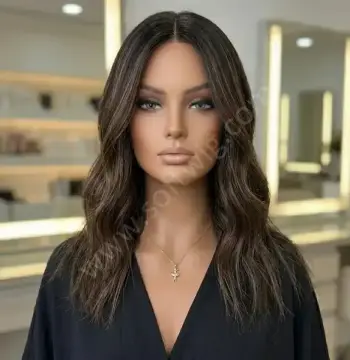
Ombre Highlight Dark Brown Effortless Wave HD Lace Front Human Hair Wig Pre-Plucked for Wedding Parties
- Lengths
- 12" · 14" · 16" · 18" · 20" · 22" · 24"
- Lace
- 13x4 Lace · 13x6 Lace
- Cap
- Small · Medium · Large